

How Can Fermented Soybean Meal Improve Feed Value and Production Consistency?
Jul 20, 2026

Fermented soybean meal can transform a conventional protein ingredient into a higher-value feed ingredient through the coordinated action of microbial fermentation and specialized processing equipment.
Industry Challenge
At industrial scale, however, consistent fermentation depends on precise process control, reliable equipment, and repeatable production conditions.
Solutions
Myande's fermented soybean meal processing solution integrates fermentation, drying, automation, and pilot-scale validation into a complete system. By combining process engineering with specialized equipment, the solution helps feed manufacturers turn complex fermentation processes into a more standardized and scalable production operation.
How Does Fermentation Improve the Nutritional Value of Soybean Meal?
Soybean meal is widely used as a protein source in animal feed, but its nutritional utilization can be limited by certain antinutritional factors, including soybean antigen proteins and trypsin inhibitors.
Through controlled microbial fermentation, macromolecular proteins can be broken down into smaller peptides that are easier for animals to utilize. At the same time, fermentation can reduce certain antinutritional factors and generate beneficial metabolites and functional components, including probiotics, peptides, lactic acid, and vitamins.
The resulting fermented soybean meal can offer improved digestibility and palatability, making it particularly relevant for applications such as young animal nutrition and specialized animal feed.
For feed manufacturers, this creates an opportunity to develop higher-value protein ingredients while improving the functional properties of soybean meal.
What Equipment Is Needed for Industrial Fermented Soybean Meal Production?
Scaling up soybean meal fermentation requires more than a fermentation tank. The complete production system needs to maintain stable conditions throughout feeding, fermentation, drying, material handling, and process control.
Based on different fermentation requirements, Myande has developed equipment systems supporting anaerobic, aerobic, and facultative fermentation processes.
The system integrates:
🔸Automated feeding
🔸Precise temperature control
🔸Uniform material discharge
🔸Controlled fermentation conditions
🔸Continuous material transfer
🔸Integration with downstream drying
🔸Automated process monitoring and control
This integrated approach helps reduce manual intervention and improve batch-to-batch consistency, which are critical considerations when moving from small-scale fermentation to industrial production.
How Can Fermented Soybean Meal Be Dried Efficiently?
Drying fermented soybean meal presents another technical challenge. After fermentation, the material can have relatively high viscosity and different flow characteristics from conventional soybean meal, potentially causing material buildup and increasing energy consumption in conventional drying equipment.
To address these challenges, Myande has developed a multi-stage fluidized drying bed with segmented temperature control.
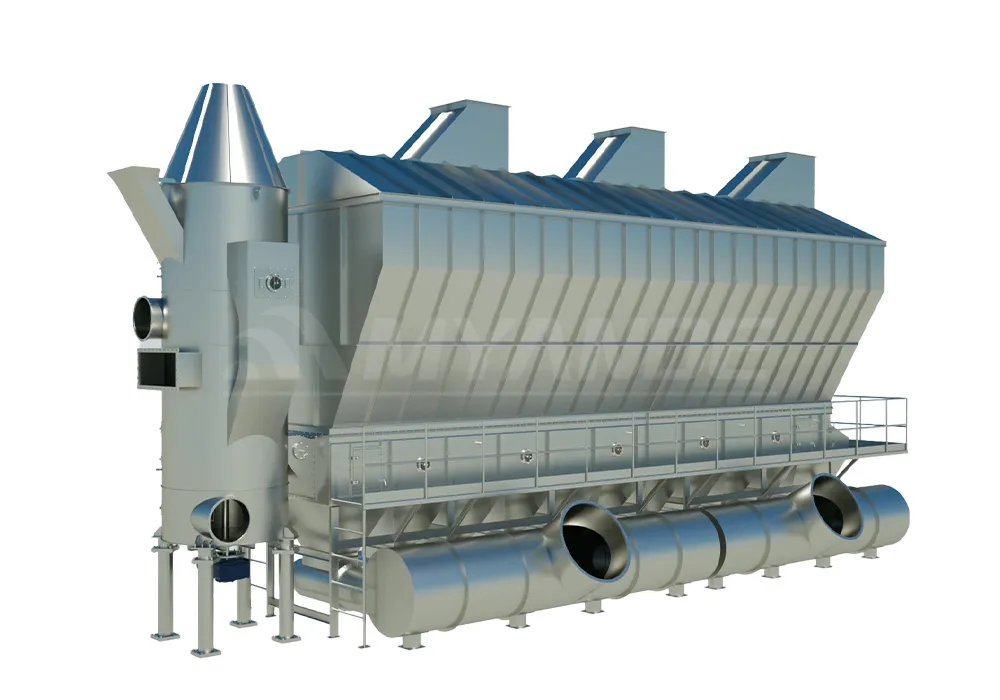
The system enables more precise control of drying conditions while helping reduce material sticking and improve drying efficiency. Automated control units continuously monitor and adjust key parameters such as temperature, moisture, and airflow, supporting stable product quality throughout the drying process.
Integrating fermentation and drying into a coordinated production system also helps manufacturers achieve more consistent final moisture levels and nutritional specifications.
Why Is Pilot-Scale Validation Important Before Commercial Production?
Moving from laboratory fermentation to full-scale production involves significant process and investment risks. Different raw materials, microbial processes, fermentation conditions, and drying parameters can produce different results at industrial scale.
Myande's fermentation pilot plant provides a platform for testing and validating production processes before full-scale implementation.
The pilot system can simulate different:
🔸Raw material formulations
🔸Fermentation processes
🔸Drying processes
🔸Fermentation temperatures and humidity levels
🔸Material layer thicknesses
🔸Ventilation and airflow conditions
🔸Material characteristics
🔸Product quality parameters
The resulting process data can be used to optimize operating conditions and provide technical parameters for the design and commissioning of commercial production lines.
This pilot-to-industrial validation approach helps reduce the uncertainty involved in production scale-up and provides a stronger technical foundation for investment decisions.
From Fermentation Technology to a Scalable Production Solution
Industrial fermented soybean meal production requires coordination across the entire process, from raw material preparation and fermentation to drying, automation, and quality control.
Myande's solution combines process engineering, specialized fermentation equipment, automated control, drying technology, and pilot-scale validation to create an integrated production framework.
For feed manufacturers, this approach can help achieve more stable nutritional quality while reducing manual intervention and improving production efficiency. More importantly, it provides a practical pathway for scaling fermented soybean meal from experimental production to reliable industrial manufacturing.
As demand grows for functional and higher-value feed ingredients, fermented soybean meal processing technology can provide feed manufacturers with an effective route to improve protein utilization, product consistency, and production performance.


Recent Posts

October 26, 2016
The Most Successful Engineering Contractor




Contact Us
Product Information
Quantity
Unit
Piece
Support order samples, customization, wholesale direct, and complete payment. If the product you look for does not have corresponding customized content, pls fill out the form below to contact us, and we will reply ASAP.