

How Do Buyers Choose Canola Oil Processing Equipment: Key Factors for Higher Oil Yield and Lower Energy Use
Jul 22, 2026

As a Senior Oils & Fats Engineer at Myande, I have seen first-hand how much pressure oilseed processors face today. Energy costs remain a major concern, while processors are also expected to improve oil yield, maintain product quality, and operate more sustainably.
For canola processing in particular, these challenges cannot be solved by upgrading a single piece of equipment. In my experience, the biggest gains come from looking at the entire process, from preparation and pressing to extraction, refining, material handling, and energy management.
That is why we focus on combining efficient equipment, optimized process design, and intelligent control to help canola processors achieve lower consumption and more stable production.
Where Can Canola Processing Plants Reduce Energy Consumption?
When we evaluate an oilseed processing plant, steam, electricity, and solvent consumption are three areas I pay close attention to.
Different stages of the process have different energy requirements. Conditioning, flaking, solvent extraction, desolventizing, and refining all present opportunities for optimization.
At Myande, we have developed equipment and technologies for these energy-intensive stages, including:
🔸High-efficiency conditioning towers
🔸Large-scale DTDC desolventizers
🔸Negative-pressure draining technology
🔸VRS and ISR technologies
🔸Heat pump technology
🔸Resin adsorption technology
The important point, from my perspective, is that energy efficiency should not be considered equipment by equipment. A high-performance machine can only deliver its full potential when its operating parameters are properly matched with the upstream and downstream processes.
That is why we look at the whole production system, rather than optimizing isolated units.
How Can Equipment Improve Canola Oil Yield?
For an oilseed processor, reducing energy consumption is important, but it cannot come at the expense of oil recovery.
One of the technologies I am particularly proud of is Myande's fifth-generation E-type extractor. It was developed for efficient solvent extraction of oilseeds including soybean, canola, cottonseed, and sunflower seed.

In practical applications, our focus is on achieving efficient extraction while keeping solvent consumption under control. The extractor is therefore designed as part of a broader process system rather than as an independent machine.
We apply the same philosophy to refining.
Our nano-cavitation technology, for example, improves material mixing and chemical reactions at the nanoscale. From an engineering perspective, better mixing means we can use process chemicals more efficiently. This can help reduce acid and alkali consumption and lower refining losses.

We have also developed dual-zero and dual-low deodorization technologies for vegetable oil refining. These technologies are designed to support oil quality and safety while improving the overall efficiency of the refining process.
For me, the objective is straightforward: recover more oil, use fewer resources, and maintain the quality that the final product requires.
What Have We Learned from Large-Scale Canola Processing Projects?
One of the most valuable parts of my work is seeing how equipment performs under real industrial conditions.
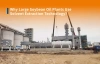
In a large-scale project implemented in 2020, Myande supplied equipment for a 3,000 TPD canola pressing line together with a 5,000 TPD soybean processing line.

The production lines incorporated equipment such as our E-type extractor, DTDC desolventizer, flaking mills, cracking mills, ring-type scraper conveyors, and wet-meal scraper conveyors.
Projects at this scale have taught us an important lesson: plant performance depends on how the entire system works together.
A flaker, extractor, or desolventizer may perform very well individually, but the real challenge is coordinating capacity, material flow, moisture, temperature, residence time, steam consumption, and other operating parameters across the complete line.
This is why our engineering approach starts with the process requirements and works backward to equipment selection and system design.
Why Does Process Integration Matter in Canola Oil Production?
When customers talk to us about a new canola processing plant, the conversation usually goes beyond equipment specifications.
We need to understand the raw material, target capacity, product requirements, utility conditions, available space, energy costs, and expected operating model.
From there, we can determine how preparation, pressing, extraction, refining, material handling, and automation should work together.
This integrated approach is particularly important for large-scale plants, where small inefficiencies can become significant operating costs over time.
For example, improving heat recovery in one section can affect steam requirements elsewhere. Adjusting moisture and temperature in preparation can influence extraction performance. Refining conditions can affect both oil quality and refining losses.
The process is interconnected, and our engineering decisions need to reflect that.
How Is Digitalization Changing Oilseed Processing?
Another area I believe will have a major impact on oilseed processing is intelligent manufacturing.
At Myande, we are integrating big data, artificial intelligence, IoT, and edge computing into our manufacturing and engineering systems. We are also developing smart manufacturing based on 5G and low-carbon production technologies.
From a technical perspective, digitalization is valuable when it helps operators make better decisions.
Real-time process data can help us understand how equipment is performing, identify abnormal operating conditions, monitor energy consumption, and optimize production parameters.
I see this as the next step in oilseed processing: moving from simply having automated equipment to having production systems that can continuously use data to improve operation.
What Should Processors Consider When Selecting Canola Oil Processing Equipment?
If I were evaluating a new canola processing project, I would not start by asking which machine is the best.
I would start with five questions:
1. What is the target processing capacity?
2. What are the characteristics of the canola to be processed?
3. What oil yield and product quality targets need to be achieved?
4. How much energy and solvent can the process consume?
5. How well will the equipment integrate into the complete production line?
These questions help determine whether a solution is actually suitable for the project.
At Myande, we provide technologies covering oilseed preparation, pressing, solvent extraction, refining, plant-based protein, phospholipid processing, biodiesel, and HVO pretreatment. We can also support projects from process consulting and engineering design through equipment manufacturing, installation, commissioning, training, and after-sales service.
With projects in more than 80 countries and regions, we have accumulated experience working with different oilseeds, production capacities, process conditions, and customer requirements.
What Does the Future of Canola Processing Look Like?
From my perspective, the future of canola processing is not about pursuing one single breakthrough technology.
It is about making many parts of the process work better together.
More efficient preparation equipment can reduce energy consumption. Better extraction technology can improve oil recovery. Advanced refining can help maintain oil quality while reducing refining losses. Digital systems can provide better control over the entire operation.
When these technologies are integrated properly, we can move toward lower energy consumption, higher oil recovery, more consistent quality, and smarter plant operation.
That is ultimately what we are working toward at Myande: helping oilseed processors build production systems that are more efficient, reliable, and sustainable, while creating measurable value throughout the entire process.


Recent Posts

October 26, 2016
The Most Successful Engineering Contractor




Contact Us
Product Information
Quantity
Unit
Piece
Support order samples, customization, wholesale direct, and complete payment. If the product you look for does not have corresponding customized content, pls fill out the form below to contact us, and we will reply ASAP.