

Soybean Oil Production Line: Equipment, Process Flow and Capacity Options?
Aug 27, 2026
A soybean oil production line can become a costly mistake when investors choose equipment before defining what the plant must produce. I have seen project teams compare machine prices too early, only to discover that their product targets, operating schedule, or expansion plans require a different process route. The solution is to start with the business objective and build the line around it.
A soybean oil production line should be designed as an integrated system, not selected from a standard equipment catalogue. I recommend that investors first define their target products, expected operating hours, quality requirements, soybean sourcing conditions, and expansion plans. These decisions determine whether the project needs preparation only, pre-pressing and solvent extraction, crude oil handling, refining, meal processing, automation, and supporting utility systems.
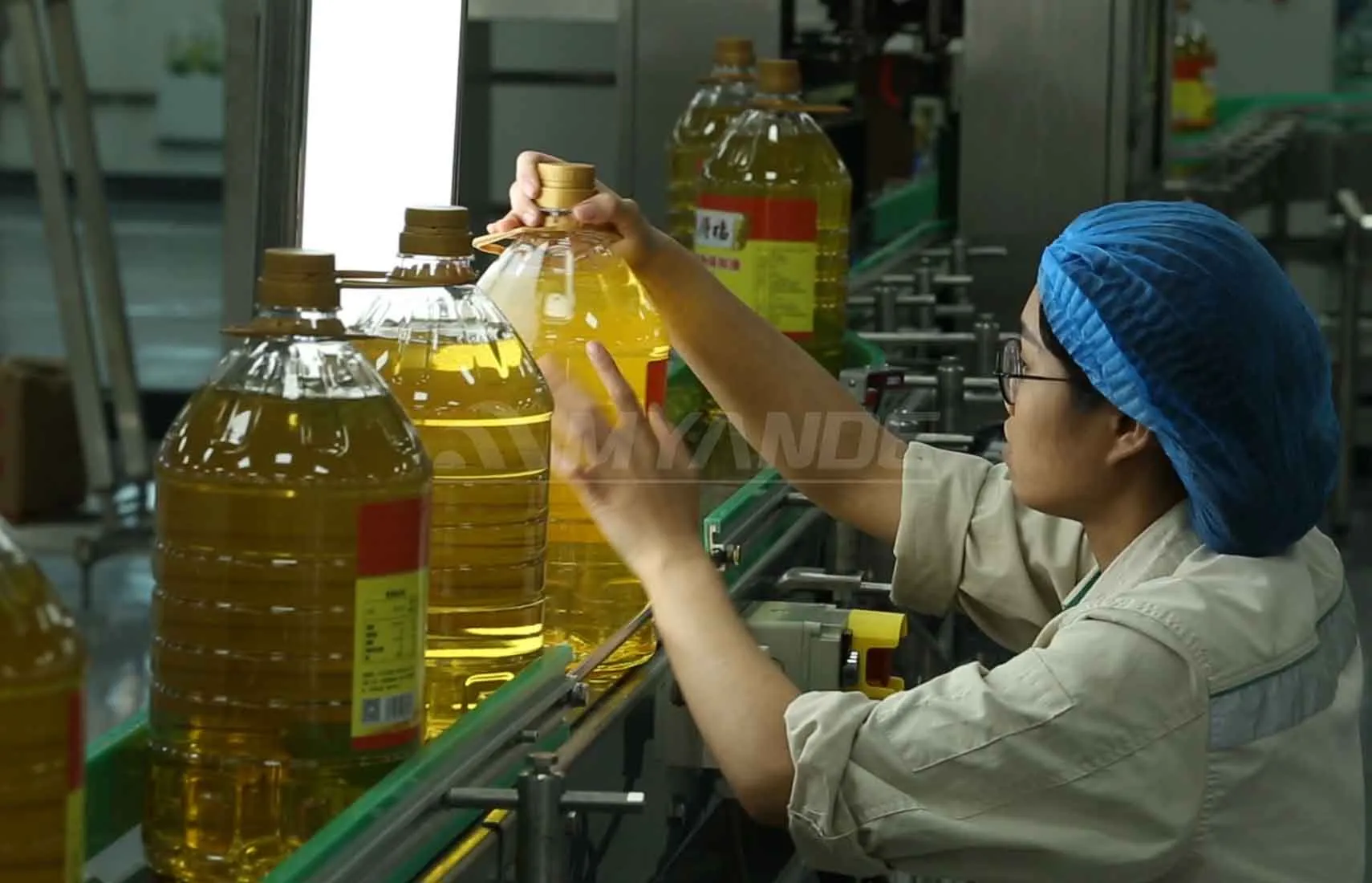
I approach soybean oil projects as investment and operating-system decisions. The visible equipment matters, but the less visible decisions often determine whether a plant reaches stable throughput, achieves intended product quality, controls losses, and remains practical to expand. Below, I share the planning framework I use when discussing new crushing and extraction projects with investors.
How Should I Define a Soybean Oil Production Line Objective?
Many investors begin by asking which equipment belongs in a soybean plant. I understand the question, but I often find that it comes too early. If the intended product is unclear, the team may buy a line that produces the wrong oil grade, limits meal value, or creates unnecessary downstream investment.
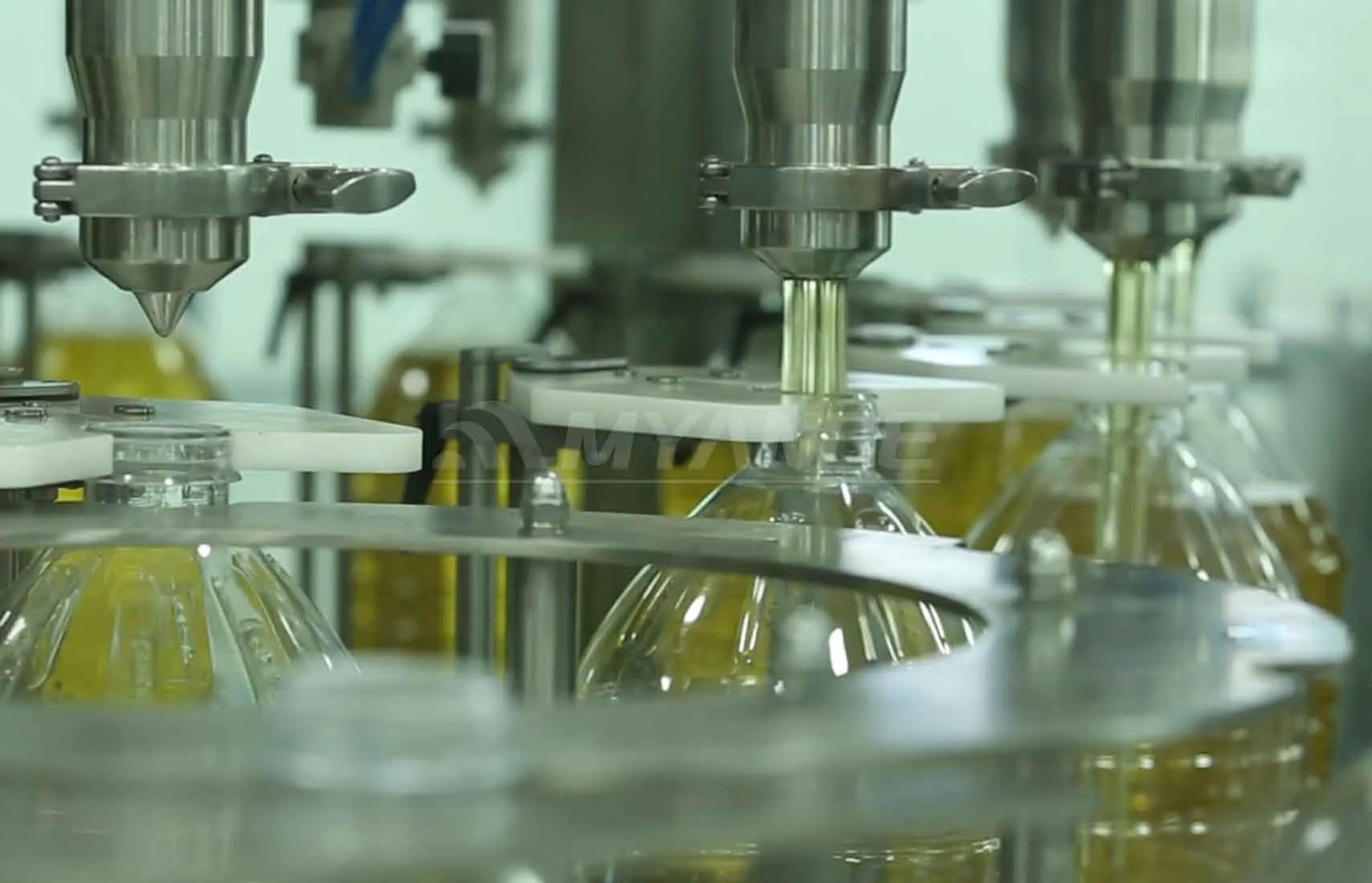
I recommend defining a soybean oil production line by its commercial output first: crude soybean oil, refined edible oil, soybean meal, lecithin, biodiesel feedstock, or a combination of these products. The final product mix determines the process boundary, required quality-control points, utility demand, storage design, and equipment configuration.
Start With the Revenue Model
In my planning discussions, I ask investors a simple question: Where will the plant make its margin? The answer is rarely “from oil alone.”
A soybean processing facility may earn value from several output streams:
🔸Crude soybean oil for refining, food ingredients, or industrial uses
🔸Refined soybean oil for retail, foodservice, and food manufacturing markets
🔸Soybean meal for feed markets, aquaculture, poultry, or livestock applications
🔸Lecithin and gums recovered during degumming
🔸Soapstock or acid oil, depending on the refining route
🔸Biodiesel feedstock, where local regulation and demand support it
I once worked on an early-stage planning discussion where the investor initially requested a “standard soybean oil plant.” After several conversations, the real priority became clear: the project needed stable, high-value soybean meal for regional feed customers, while crude oil would be sold to an existing refinery. That changed the planning focus. The team needed to evaluate meal desolventizing, cooling, moisture management, storage time, and loading logistics more carefully than an oil-focused project might.
Define the Process Boundary
I usually divide the potential project scope into four practical boundaries:
| Project Objective | Typical Process Boundary | Main Planning Focus |
| Crude oil and meal production | Seed receiving through extraction and meal handling | Oil recovery, meal quality, solvent safety |
| Crude oil for third-party refining | Preparation, extraction, crude oil storage | Stable crude oil specifications, tankage, logistics |
| Integrated edible oil production | Extraction plus refining, deodorization, filling or bulk dispatch | Food safety, refining yield, product flexibility |
| Value-added downstream processing | Extraction, refining, fractionation, biodiesel, specialty ingredients | Product quality, market segmentation, integration risk |
I do not assume that a larger scope always creates a better investment. A fully integrated soybean oil production line may capture more value, but it also introduces additional capital requirements, quality-control responsibilities, operating complexity, and market exposure.
Questions I Ask Before Equipment Selection
Before I request a technical proposal from any supplier, I encourage investors to confirm the following assumptions:
1. What oil specification will buyers require?
I consider crude oil parameters, refined oil requirements, color, odor, phosphorus limits, and contaminant-control expectations.
2. What meal specification will customers require?
I look at protein expectations, residual solvent compliance, moisture, temperature, particle size, and storage conditions.
3. Will the plant process only soybeans?
I ask this because future flexibility for rapeseed, sunflower, or other oilseeds may affect preparation equipment and process design.
4. Will oil be refined on site or sold as crude oil?
I treat this as one of the biggest decisions because it changes the engineering scope significantly.
5. What local regulations apply?
I recommend that clients obtain qualified local advice on solvent handling, fire protection, emissions, wastewater, food safety, and occupational safety requirements.
A supplier should respond to these questions with a process concept, not simply a list of machines.
Which Soybean Oil Production Line Process Flow Fits the Project?
A process flow can look simple on a presentation slide, but every stage affects the next one. If soybean preparation is inconsistent, extraction performance can suffer. If desolventizing is not matched to meal requirements, the plant may face quality, safety, or operating challenges. I therefore evaluate the entire chain as one connected system.
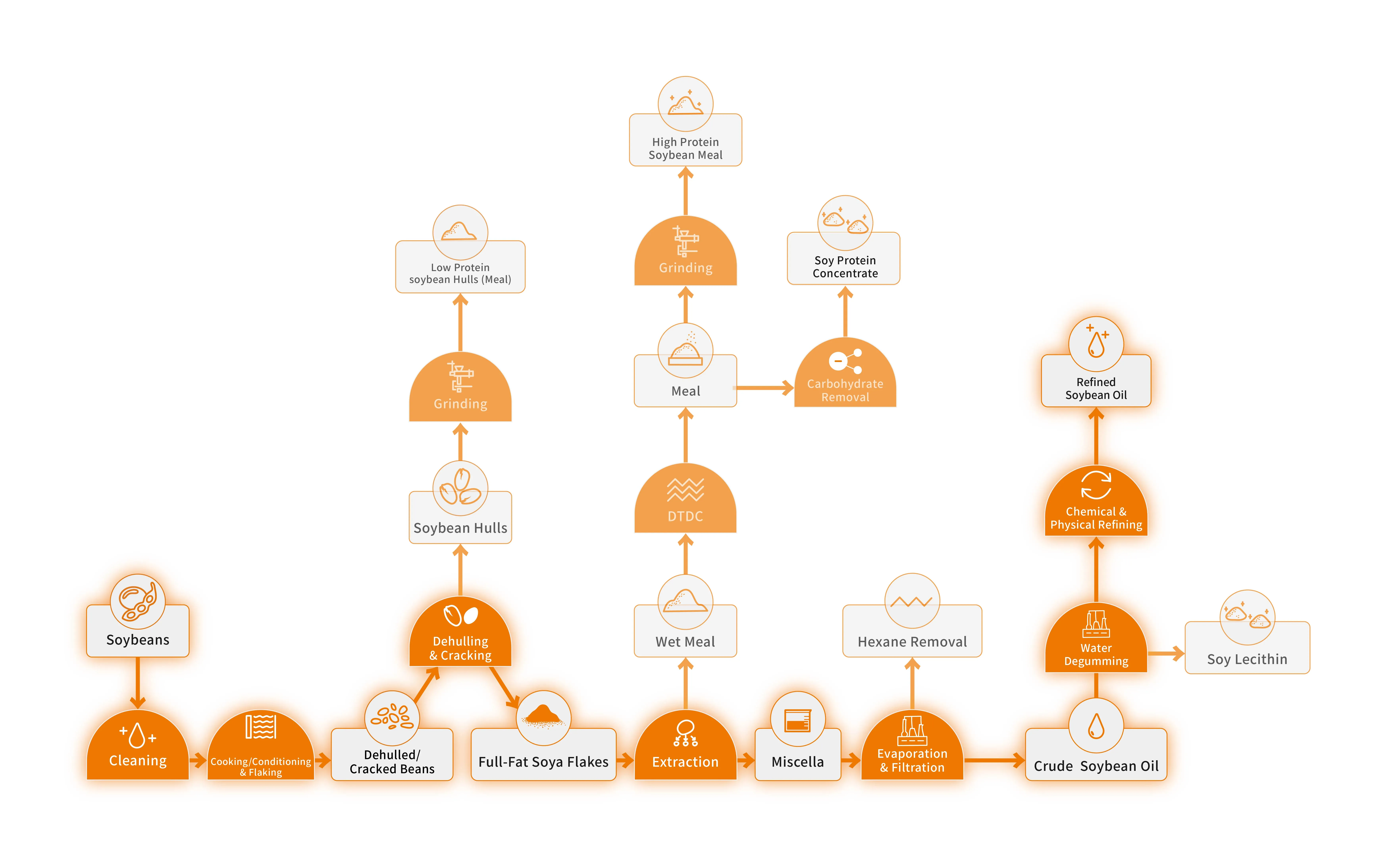
For most large-scale soybean crushing projects, I consider a process flow that includes receiving, cleaning, conditioning, crushing, flaking, pre-pressing where applicable, solvent extraction, desolventizing and toasting, solvent recovery, crude oil handling, and meal finishing. I select the exact route according to capacity, product requirements, available utilities, and local compliance conditions.
A Typical Integrated Process Chain
I usually explain the soybean oil production line in the following sequence:
1. Receiving and storage
2. Cleaning and impurity removal
3. Conditioning, cracking, and flaking
4. Pre-pressing, if the chosen route requires it
5. Solvent extraction
6. Miscella treatment and crude oil recovery
7. Desolventizing, toasting, drying, and cooling of meal
8. Solvent recovery and emission-management systems
9. Crude oil storage, meal storage, and dispatch
10. Optional refining and further processing
I stress that this is a planning map, not a universal equipment list. Some projects may use different preparation steps, different extraction configurations, or a separate refining facility.
The final design must be based on validated feedstock data, product specifications, regulations, and a qualified engineering review.
Why Preparation Equipment Matters
Preparation equipment determines whether soybeans enter extraction in a condition that supports stable downstream operation. In my experience, investors sometimes underestimate this area because preparation equipment may appear less dramatic than an extractor.
However, seed cleaning, conditioning, cracking, and flaking can affect:
🔸Material flow consistency
🔸Flake structure and extraction behavior
🔸Meal composition and fiber content
🔸Oil recovery potential
🔸Wear on downstream equipment
🔸Dust control and housekeeping requirements
For example, a project that values higher-protein meal may examine dehulling more closely. Yet I would not present dehulling as automatically beneficial. It can add equipment, operating controls, hull handling requirements, and a different material balance. The commercial value of improved meal characteristics must justify the added complexity.
Extraction, Desolventizing, and Recovery Work Together
Solvent extraction is not a stand-alone purchasing decision. I review it together with the desolventizing-toasting-drying-cooling system, miscella distillation, solvent recovery, vapor handling, automation, and safety systems.
The extraction section influences oil recovery. The meal-processing section influences final meal condition. The recovery section affects solvent circulation, energy demand, environmental performance, and plant stability. A weak interface between these systems can cause bottlenecks even when each individual machine has an acceptable nominal rating.
I advise investors to ask suppliers where the guaranteed process boundary begins and ends. A supplier should clearly state which feedstock conditions, utility conditions, operating assumptions, and product specifications support its performance proposal.
Myande, for example, provides turnkey engineering capability across planning, process design, equipment manufacturing, automation, installation support, commissioning, and training. For buyers, I see this type of integrated capability as valuable when it reduces interface risk. However, I still recommend that every buyer review the exact contract scope, technical guarantees, reference relevance, and applicable certification documents independently.
How Do I Select Soybean Oil Production Line Capacity Options?
Capacity decisions often become distorted by one number: tons per day. I see investors request the highest possible nominal capacity, while operations teams worry about maintenance windows, soybean supply variability, utility limits, and market demand. A useful capacity decision must connect nameplate throughput with real operating conditions.
I select soybean oil production line capacity by evaluating annual production targets, operating days, expected utilization, maintenance strategy, raw-material availability, storage logistics, and future expansion. Nominal tons-per-day capacity is only one planning input; the achievable business output depends on how consistently the full system can operate.
Move From Annual Demand to Operating Capacity
I generally begin with the annual commercial target rather than the equipment rating. The planning sequence looks like this:
1. Estimate annual soybean processing demand.
2. Confirm planned operating days per year.
3. Define daily operating hours and shift pattern.
4. Include planned maintenance shutdowns.
5. Apply a realistic utilization assumption.
6. Check receiving, storage, extraction, meal dispatch, and utility bottlenecks.
7. Evaluate whether the initial plant should allow phased expansion.
I do not use a universal utilization figure because every project has different supply-chain conditions and operating practices. A plant that receives soybeans by rail, barge, and truck may have different continuity risks from a plant dependent on seasonal truck deliveries. Similarly, a facility with limited meal storage may be constrained by customer pickup schedules rather than extraction capacity.
Compare Capacity Concepts, Not Just Equipment Sizes
| Capacity Approach | When I Consider It | Potential Benefit | Main Risk to Evaluate |
| Conservative initial capacity | New market or uncertain raw-material supply | Lower initial exposure | Expansion may be needed sooner |
| Capacity matched to contracted demand | Stable supply and offtake agreements | Clearer financial planning | Contract concentration risk |
| Larger initial capacity | Strong logistics and established markets | Lower unit cost potential at scale | Higher capital and ramp-up risk |
| Phased capacity expansion | Long-term growth plan with uncertainty | Flexibility and staged investment | Future tie-in and layout constraints |
Design for Expansion Before Construction
I have seen expansion become expensive when the original layout did not reserve enough space for future equipment, conveyors, tanks, substations, or utility connections. I therefore ask project teams to decide early whether expansion is a possibility or a firm strategic goal.
A practical expansion review may include:
🔸Space for a second preparation or extraction train
🔸Structural allowances for higher conveying capacity
🔸Extra tank-farm area and truck-loading positions
🔸Electrical-substation expansion capability
🔸Boiler, cooling water, compressed air, and steam-system allowances
🔸Automation architecture that can incorporate additional process areas
🔸Foundations, pipe racks, and utility corridors designed for future tie-ins
I do not suggest overbuilding every system. That can tie up capital without value. Instead, I recommend identifying the items that are difficult or disruptive to enlarge later, such as building layout, utility corridors, solvent-handling infrastructure, and bulk-storage logistics.
Capacity Must Match the Operating Model
A continuously operated plant requires a different maintenance and staffing model from a facility designed for fewer operating hours. I ask clients whether they plan to run:
🔸Continuous production with scheduled maintenance windows
🔸Seasonal campaigns based on soybean availability
🔸Flexible production around energy prices or customer orders
🔸A multi-seed operation that changes processing conditions during the year
These choices affect spare-parts planning, automation requirements, laboratory staffing, inventory levels, and operator training. I have found that the best capacity option is often the one that the organization can reliably operate—not the one with the highest number on a supplier datasheet.
What Equipment Should I Evaluate in a Soybean Oil Production Line?
Equipment selection becomes difficult when buyers compare isolated machine prices without evaluating interfaces, materials of construction, automation, service access, and process responsibility. I have seen low initial quotations create higher lifecycle costs when the systems do not integrate well or when local service support is unclear.
I evaluate soybean oil production line equipment as a coordinated package of process equipment, utilities, controls, safety systems, and service capability. Buyers should compare suppliers on process design, reference relevance, engineering scope, manufacturing quality, automation integration, commissioning support, and lifecycle performance—not on individual machine prices alone.
Core Equipment Categories to Review
I typically group equipment into the following categories:
| Equipment Area | Examples | Evaluation Questions |
| Receiving and storage | Silos, conveyors, cleaning systems | Can the system handle expected soybean quality and logistics peaks? |
| Preparation | Conditioners, crackers, flakers | Does the design support the intended extraction route and meal target? |
| Extraction | Extractor, pumps, miscella systems | Is the process proven at a relevant scale and feedstock condition? |
| Meal finishing | DTDC, dryers, coolers, conveyors | Can the system support required meal moisture, temperature, and safety controls? |
| Solvent recovery | Evaporators, condensers, vapor systems | How does the supplier address recovery, emissions, and safe operation? |
| Crude oil handling | Centrifuges, tanks, filtration systems | What crude oil quality and storage requirements are assumed? |
| Automation |
PLC, DCS, sensors, historian, dashboards |
Can the system support traceability, alarms, and future integration? |
| Utilities and safety |
Steam, power, fire protection, ventilation |
Are utility and compliance requirements clearly defined? |
Evaluate the Supplier’s Engineering Depth
For a major industrial investment, I look beyond the brochure. I ask suppliers to demonstrate how they manage the connection between process design and equipment manufacturing.
A robust supplier evaluation should include:
🔸Relevant reference projects, with comparable feedstock, scale, and product objectives
🔸Process-flow documentation, including design assumptions and battery limits
🔸Utility-consumption assumptions, clearly stated and subject to verification
🔸Equipment manufacturing standards and quality-control procedures
🔸Automation architecture and cybersecurity responsibilities
🔸Commissioning methodology and training scope
🔸Spare-parts strategy and local or regional service response
🔸Performance-guarantee terms, including exclusions and test conditions
🔸Health, safety, environmental, and regulatory responsibilities
Look at Digital Operations Early
I increasingly encourage investors to include automation and maintenance planning during the initial design phase. A soybean plant has many rotating assets, material-handling points, pumps, conveyors, heat-transfer systems, and safety-critical controls. When maintenance information is scattered across spreadsheets, paper records, and operator memory, the plant may struggle to identify recurring issues.
Myande describes its iMRO intelligent equipment maintenance system as combining maintenance standards, Internet of Things monitoring, and AI-based predictive methods. I see systems of this kind as worth evaluating, especially for large facilities that want stronger asset visibility. Still, I recommend that buyers ask practical questions:
🔸Which equipment will have online monitoring?
🔸Who owns the operating data?
🔸Which alarms require human confirmation?
🔸How will the maintenance workflow connect with the plant’s existing systems?
🔸What training will operators and maintenance teams receive?
Technology should support disciplined operations. It should not replace sound engineering, routine inspection, or qualified professional judgment.
Frequently Asked Questions
1. What is included in a soybean oil production line?
A soybean oil production line may include soybean receiving, cleaning, conditioning, cracking, flaking, extraction, crude oil recovery, meal desolventizing, solvent recovery, storage, utilities, automation, and optional refining. I recommend defining the required scope according to the target products and local operating conditions rather than assuming one standard configuration.
2. Should I choose mechanical pressing or solvent extraction for soybeans?
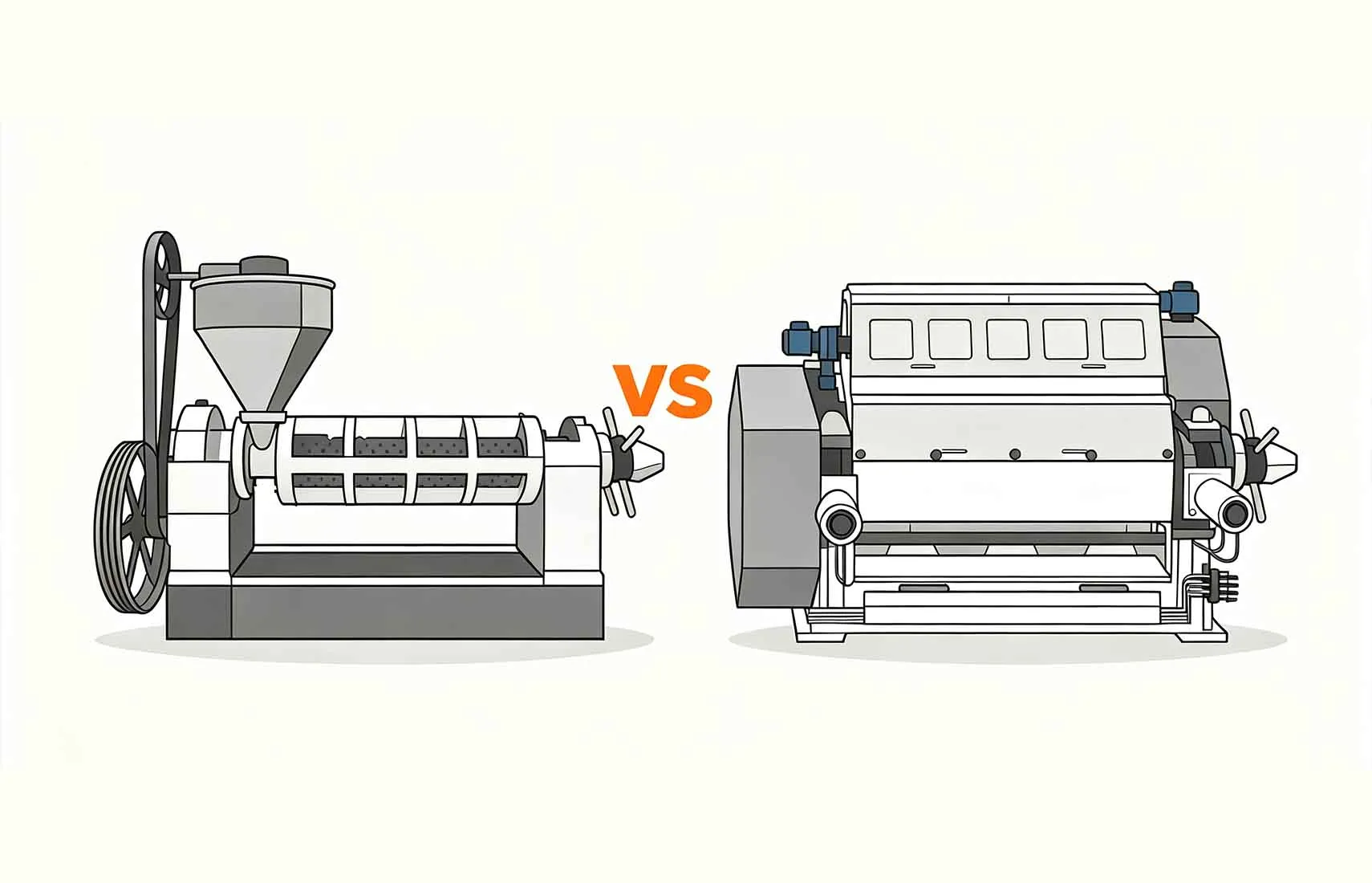
I would evaluate mechanical pressing and solvent extraction based on project scale, desired oil recovery, meal requirements, capital strategy, and operating capability. Many large soybean projects evaluate extraction-based routes, but the appropriate choice requires feedstock data, commercial analysis, safety review, and qualified engineering assessment.
3. How do I calculate soybean oil production line capacity?
I start with annual soybean-processing and product-sales targets, then assess operating days, daily hours, maintenance downtime, utilization expectations, raw-material delivery, storage, utilities, and dispatch capacity. I do not rely on nominal tons-per-day capacity alone because actual output depends on the full operating system.
4. Can a soybean crushing plant be expanded later?
A soybean crushing plant can often be expanded if the initial design reserves sufficient space, utility capacity, tankage, structural allowances, and automation flexibility. I recommend discussing future phases during the first layout and engineering stage, because later modifications can disrupt production and increase capital cost.
5. What should I verify before selecting a soybean oil equipment supplier?
I recommend verifying comparable references, process assumptions, guarantee conditions, manufacturing quality controls, safety scope, automation capability, service coverage, spare-parts support, and project-management capacity. Buyers should also verify certifications and regulatory documents directly, especially for application-specific safety and compliance requirements.
Conclusion
I believe a successful soybean oil production line begins with clear investment assumptions, not a generic equipment list. The best route depends on the target oil and meal products, expected operating model, feedstock conditions, capacity strategy, utility availability, and future expansion needs. I encourage investors to evaluate the full process chain and select suppliers that can explain interfaces, assumptions, guarantees, and lifecycle support clearly. If you are planning a new soybean project or upgrade, I recommend engaging Myande to discuss an integrated, application-specific process and engineering concept.

Recent Posts

October 26, 2016
The Most Successful Engineering Contractor


Aug 14, 2026
Large-Scale Edible Oil Plants: What You Should Know
Contact Us
Product Information
Quantity
Unit
Piece
Support order samples, customization, wholesale direct, and complete payment. If the product you look for does not have corresponding customized content, pls fill out the form below to contact us, and we will reply ASAP.