

How Is Starch Made? A Step-by-Step Guide to Industrial Starch Production
Sep 07, 2026
Industrial starch production begins with a practical problem: raw agricultural materials contain starch alongside water, fiber, protein, germ, pulp, and other components. I have seen projects become difficult when buyers treat the process as simple grinding and drying. A better solution is to design an integrated separation system around the feedstock, target product, utilities, and coproduct markets.
Industrial starch production uses a connected sequence of raw-material preparation, conditioning, size reduction, component separation, starch washing, dewatering, drying, and coproduct recovery. The exact process depends on whether the feedstock is corn, wheat, cassava, potato, or another crop. Buyers should evaluate purity, recovery, water and energy consumption, operating stability, and coproduct value instead of judging a plant by starch yield alone.
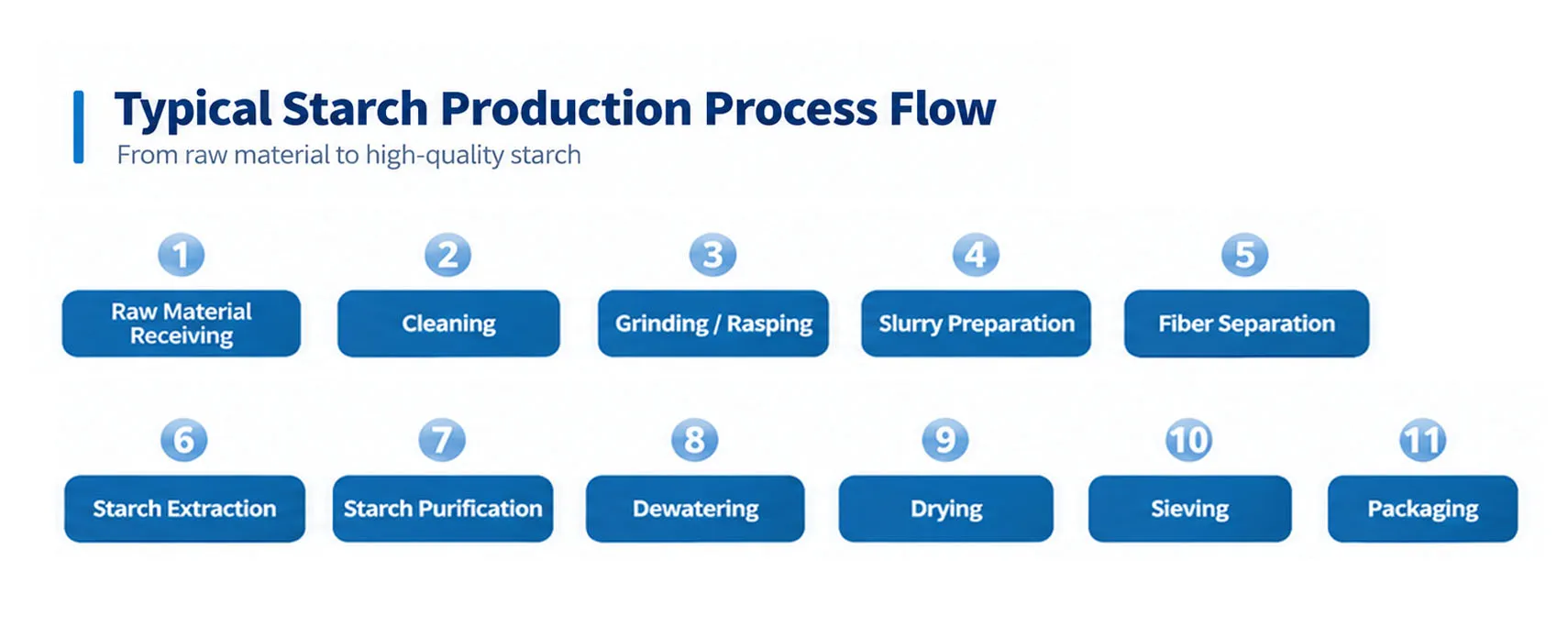
When I discuss starch projects with plant owners, I usually start with the raw material rather than the equipment list. Corn wet milling, wheat starch production, cassava processing, and potato starch extraction use different separation logic. The following steps explain the common process structure and the questions buyers should ask before selecting a technology supplier.
What Are the Main Steps in Industrial Starch Production?
A generic description can help buyers understand the sequence, but it cannot replace project-specific engineering. The main steps normally include receiving, preparation, conditioning, grinding or rasping, separation, starch refining, dewatering, drying, and coproduct handling. Each stage affects the next stage and the final economics.
The main steps in industrial starch production are feedstock reception, cleaning, conditioning, size reduction, separation of starch from other components, starch washing and purification, mechanical dewatering, thermal drying, and recovery of coproducts. Plants may add steeping, fiber recovery, germ separation, gluten separation, or slurry refining according to the feedstock and product specification.
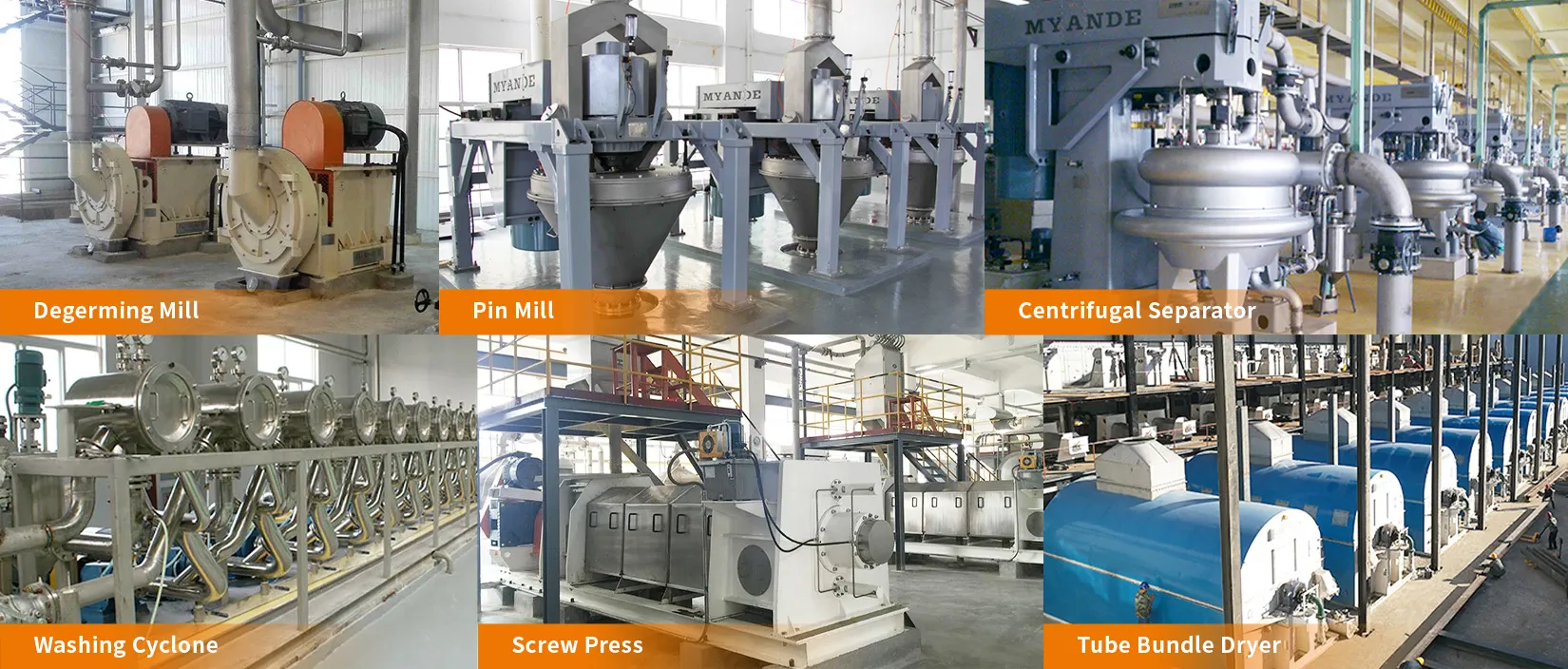
From Feedstock to Starch
I view the plant as a material-flow system:
1. Receiving and storage: The plant accepts raw materials and protects them from moisture, contamination, and deterioration.
2. Cleaning and preparation: Screens, separators, magnets, destoners, or related systems remove foreign materials.
3. Conditioning: Corn may require steeping. Other materials may require washing, soaking, or controlled moisture adjustment.
4. Grinding or rasping: The process releases starch from the cellular structure without creating unnecessary fines or damaging valuable coproducts.
5. Primary separation: The plant separates starch from germ, fiber, protein, pulp, or gluten.
6. Starch washing: Hydrocyclones, screens, centrifuges, or other equipment improve purity by removing soluble and suspended impurities.
7. Dewatering: Vacuum filters, peeler centrifuges, or similar systems reduce moisture before drying.
8. Drying and finishing: The plant dries, cools, screens, and packages the starch according to customer requirements.
9. Coproduct processing: Protein, fiber, germ, pulp, steep liquor, or other streams may become saleable products or require treatment.
The sequence is connected. For example, poor cleaning can damage downstream equipment. Inadequate separation can overload starch washing. Excessive grinding can increase fine fiber and make purification more difficult. A plant manager therefore needs to assess the whole process, not only the headline capacity of an individual machine.
In my experience with process-route discussions, the most important engineering conversations often concern interfaces. The receiving system must match the preparation section. The separation section must handle the expected slurry concentration. The dewatering system must match the dryer. Automation must coordinate flow, density, pressure, temperature, and alarms across the line.
| Evaluation area | Why it matters |
| Starch purity | It affects customer acceptance and downstream processing |
| Recovery rate | It shows how effectively the plant captures starch |
| Water consumption | It influences operating cost and wastewater volume |
| Energy consumption | It affects drying and overall production cost |
| Coproduct recovery | It can increase the value recovered from each ton of feedstock |
| Process stability | It supports consistent production and fewer interruptions |
A qualified engineering team should confirm the route through feedstock testing, mass balances, utility analysis, and application-specific design.
How Does the Raw Material Change Starch Production?
Many investment mistakes occur when a buyer assumes that one starch process fits every crop. Corn, wheat, cassava, and potato differ in structure, moisture, impurity profile, and coproduct potential. I always treat the raw material as a primary design input.
Corn starch production commonly uses steeping, degermination, grinding, fiber and gluten separation, starch washing, dewatering, and drying. Wheat starch production must manage gluten separation. Cassava processing emphasizes washing, rasping, pulp separation, and rapid handling of perishable roots. Potato starch production focuses on washing, rasping, juice separation, refining, and pulp management.
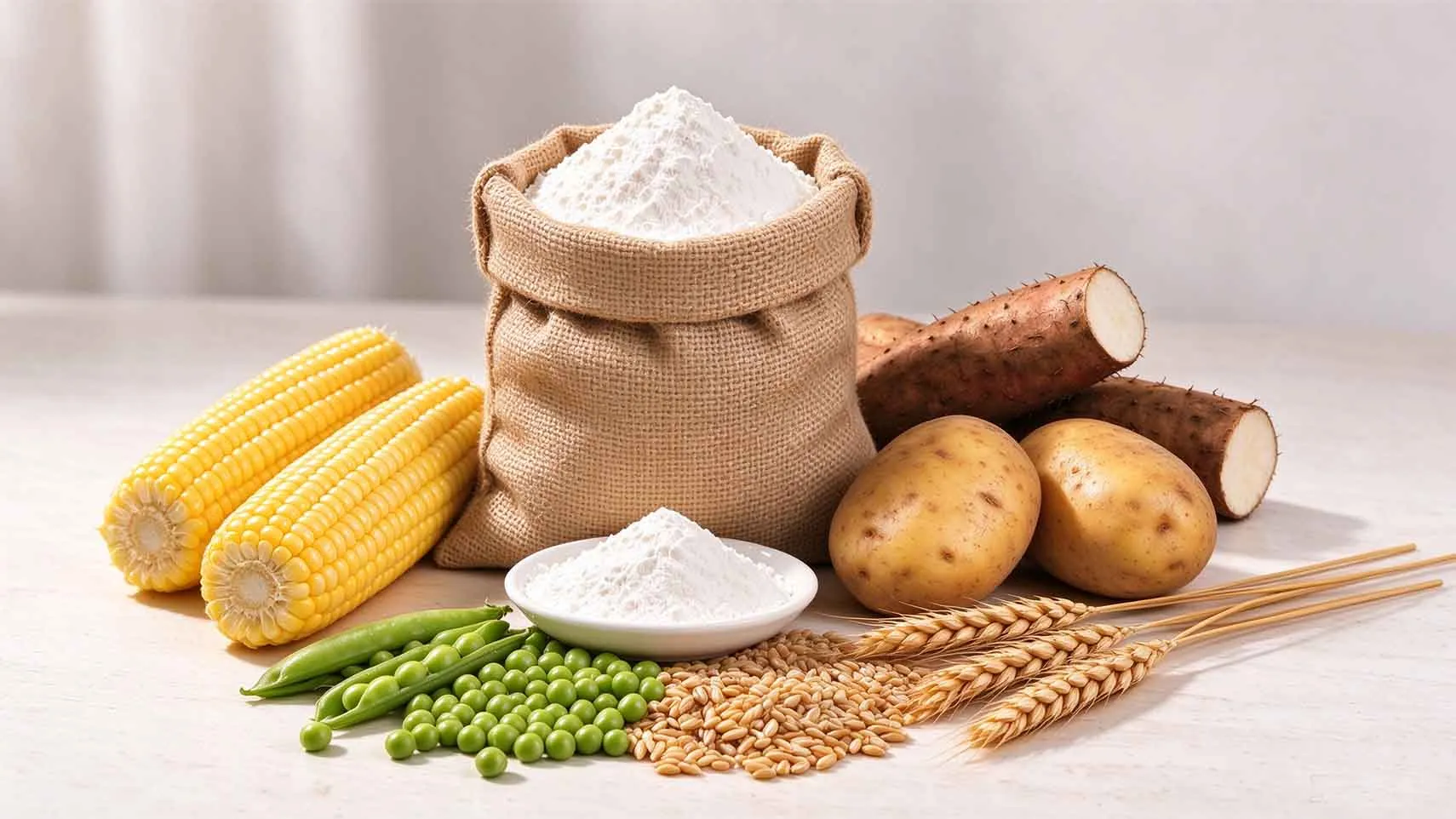
Feedstock-Specific Process Logic
Corn: Corn wet milling aims to separate starch from germ, fiber, protein, and soluble materials. Steeping softens the kernel and helps prepare it for controlled milling. Germ recovery can create an additional value stream, while fiber and protein require their own handling routes.
Wheat: Wheat contains starch and gluten in a structure that requires specialized dough preparation and separation. The process must control gluten quality, starch purity, water use, and the behavior of suspended solids. A wheat starch plant may also produce vital wheat gluten or related products.
Cassava: Cassava roots contain high moisture and can deteriorate after harvesting. The plant therefore needs effective receiving, washing, rasping, screening, starch extraction, and pulp handling. Local harvesting conditions and transport time can influence raw-material quality.
Potato: Potato processing requires intensive washing because soil and stones can enter with the crop. Rasping releases starch, while juice, pulp, and soluble components require separate management. Potato starch quality can depend strongly on cultivar, seasonal condition, and storage practices.
I have participated in discussions where the initial request focused on “a starch machine,” but the real requirement involved a complete raw-material conversion system. The buyer needed to understand seasonal supply, average and peak impurity levels, storage limitations, water quality, and the market for coproducts.
Questions I Ask Before Choosing a Route
🔸What is the feedstock’s average moisture and starch content?
🔸How much seasonal variation should the plant expect?
🔸Will the factory process one crop or several varieties?
🔸Which product purity, moisture, color, and particle-size requirements apply?
🔸Does the project require protein, germ, fiber, or pulp recovery?
🔸What water, electricity, steam, and wastewater conditions exist locally?
🔸Does the owner plan to add glucose, modified starch, maltodextrin, or fermentation products later?
These questions prevent a common error: designing for theoretical raw-material quality while operating with practical agricultural variation. Buyers should request a documented design basis and identify which assumptions require confirmation through laboratory or pilot testing.
How Should Buyers Evaluate an Industrial Starch Production Line?
A production line may meet its nameplate capacity and still underperform commercially. I have found that owners receive better decisions when they compare total value recovery, product consistency, utilities, maintainability, and supplier responsibility instead of comparing isolated equipment prices.
Buyers should evaluate an industrial starch production line through a documented mass balance, product specifications, recovery targets, utility consumption, coproduct strategy, automation scope, maintenance plan, and supplier track record with comparable feedstocks. They should also verify certifications, references, performance guarantees, and commissioning responsibilities before signing a contract.
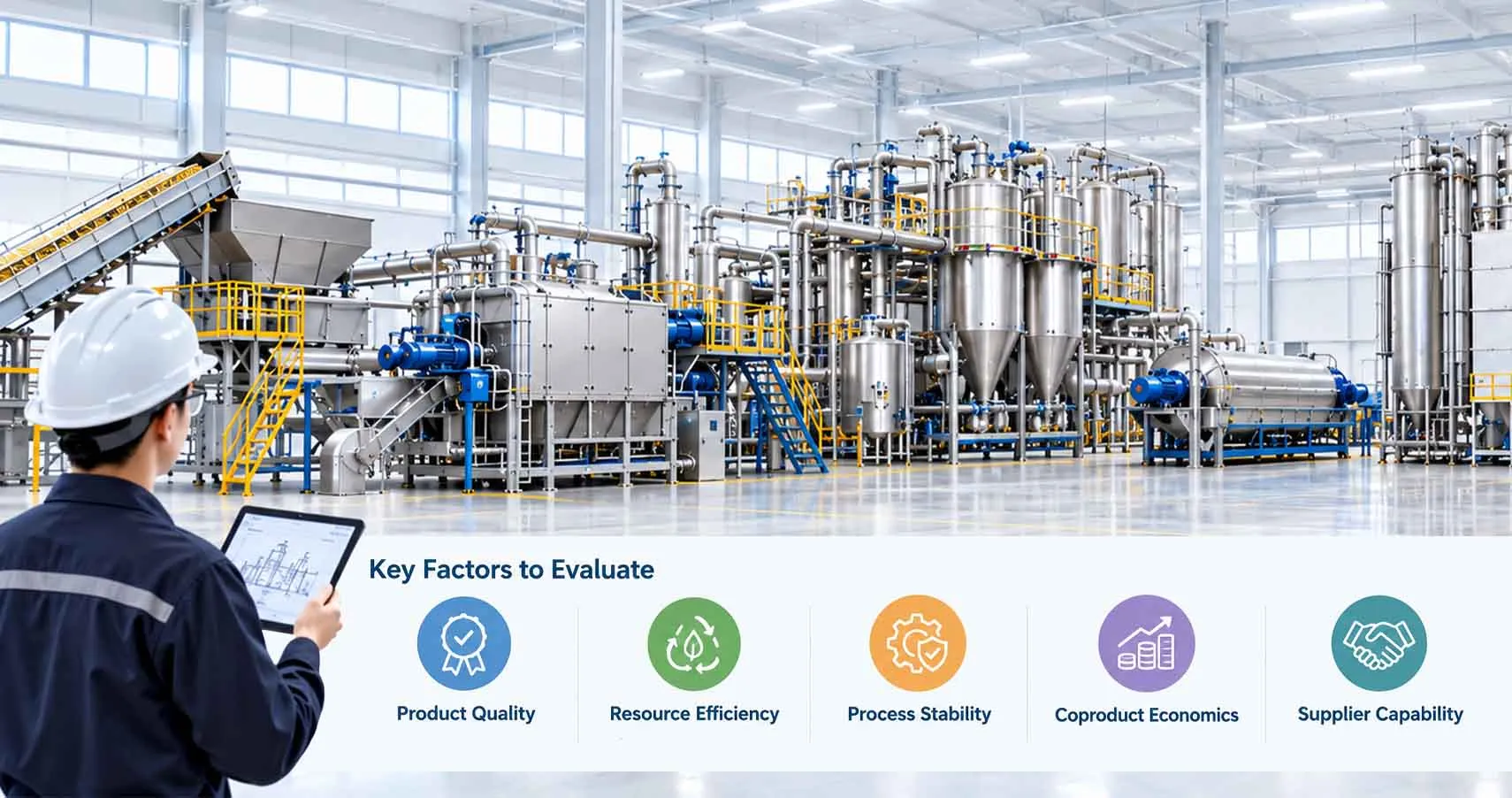
Look Beyond Starch Yield
Starch yield matters, but it is only one performance indicator. A plant that recovers more starch while producing excessive wastewater, unstable quality, or low-value coproducts may not deliver the best return.
I recommend that buyers organize technical and commercial evaluation around the following categories:
1. Product quality
The project team should define moisture, whiteness or color, purity, acidity, microbiological limits, viscosity behavior, and particle-size requirements according to the intended market. Food, paper, textile, adhesive, and fermentation customers may require different specifications.
2. Resource efficiency
The owner should examine:
🔸Fresh-water consumption per ton of finished product
🔸Steam demand for drying or concentration
🔸Electrical load for pumps, centrifuges, raspers, and dryers
🔸Wastewater volume and organic load
🔸Heat recovery and condensate-recovery opportunities
I avoid treating any universal number as valid because utilities depend on feedstock, product concentration, climate, equipment selection, and local operating conditions.
3. Process stability
Stable production usually requires reliable instrumentation and control of flow, pressure, temperature, density, moisture, and concentration. The buyer should ask how the system responds to feedstock variation, equipment fouling, blocked screens, pump failure, and changing production rates.
4. Coproduct economics
Corn plants may recover germ, fiber, protein, and steep liquor. Wheat plants may create value from gluten. Cassava and potato plants may need markets or treatment systems for pulp and wastewater. I consider coproduct handling part of the main business case, not an optional add-on.
5. Supplier capability
A suitable supplier should demonstrate more than equipment manufacturing. I would examine:
🔸Process design and mass-balance capability
🔸Equipment and system integration
🔸Automation and electrical scope
🔸Installation and commissioning support
🔸Operator training and documentation
🔸Spare-parts planning
🔸References involving similar raw materials and products
The buyer should verify certificates and certifications directly from the issuing bodies or supplier documentation. The buyer should also request clearly defined acceptance tests and identify what performance data the supplier guarantees.
My own project experience has shown me that installation and commissioning often reveal issues that do not appear in a basic equipment quotation. Pipe routing, cleaning access, sensor placement, drainage, operator interfaces, and maintenance space can affect daily performance. A qualified professional should review these details before procurement.
Frequently Asked Questions
1. Is industrial starch production the same for every crop?
No. Corn, wheat, cassava, and potato require different preparation and separation methods. Their moisture levels, cellular structures, coproducts, and storage risks also differ. I recommend selecting the process route from verified feedstock data rather than copying a standard plant design.
2. What equipment is used in starch production?
Equipment may include cleaners, steeping tanks, mills or raspers, centrifuges, hydrocyclones, screens, dewatering systems, dryers, evaporators, pumps, and automated controls. The exact combination depends on the raw material, capacity, product specification, and coproduct strategy.
3. Does higher starch yield always mean a better plant?
No. A higher recovery rate can be valuable, but buyers must also consider starch purity, moisture, water and energy use, uptime, wastewater, maintenance, and coproduct revenue. The strongest design usually maximizes the total value recovered from each ton of raw material.
4. Can a starch factory later produce glucose or modified starch?
A suitable plant can sometimes support future expansion into glucose, glucose syrup, maltodextrin, modified starch, sugar alcohols, or fermentation feedstocks. The owner should reserve space, utilities, process connections, and appropriate purification capacity during the initial planning stage.
Conclusion
Industrial starch production is an integrated raw-material separation and value-recovery system, not a universal sequence of cleaning, grinding, filtering, and drying. I recommend that investment owners compare process routes according to feedstock behavior, product quality, starch recovery, utilities, stability, coproduct value, and future expansion. Buyers should also assess the supplier’s engineering, integration, commissioning, and support capabilities. Contact Myande to discuss your raw material, target products, capacity, utilities, and long-term processing plan with a qualified project team.
Recent Posts

October 26, 2016
The Most Successful Engineering Contractor




Contact Us
Product Information
Quantity
Unit
Piece
Support order samples, customization, wholesale direct, and complete payment. If the product you look for does not have corresponding customized content, pls fill out the form below to contact us, and we will reply ASAP.