

Starch Production Process: A Complete Guide from Raw Material to Finished Starch
Sep 03, 2026
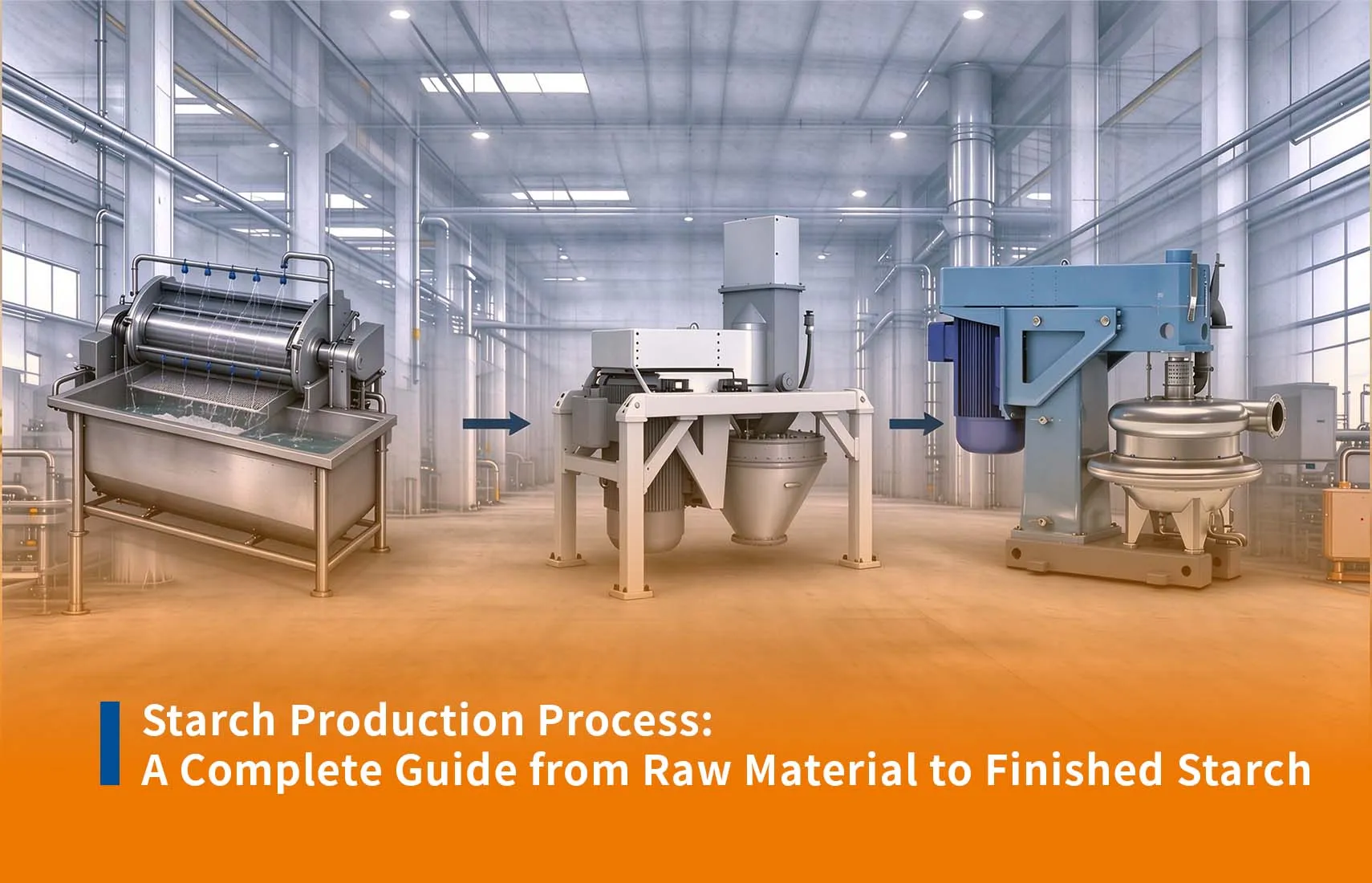
When I discuss a starch production process with investors, I often see the same problem: a simple equipment list creates false confidence. Raw materials behave differently, product markets vary, and hidden losses in water, energy, or by-products can weaken a project. I use a complete process review to connect raw material, product quality, plant economics, and future expansion.
The starch production process converts corn, wheat, cassava, or potatoes into purified, dewatered, and dried starch through raw-material preparation, grinding or rasping, component separation, starch washing, dewatering, drying, and by-product recovery. The correct process route depends on raw-material characteristics, target capacity, product specifications, utilities, environmental requirements, and the value recovered from protein, fiber, germ, or other co-products.
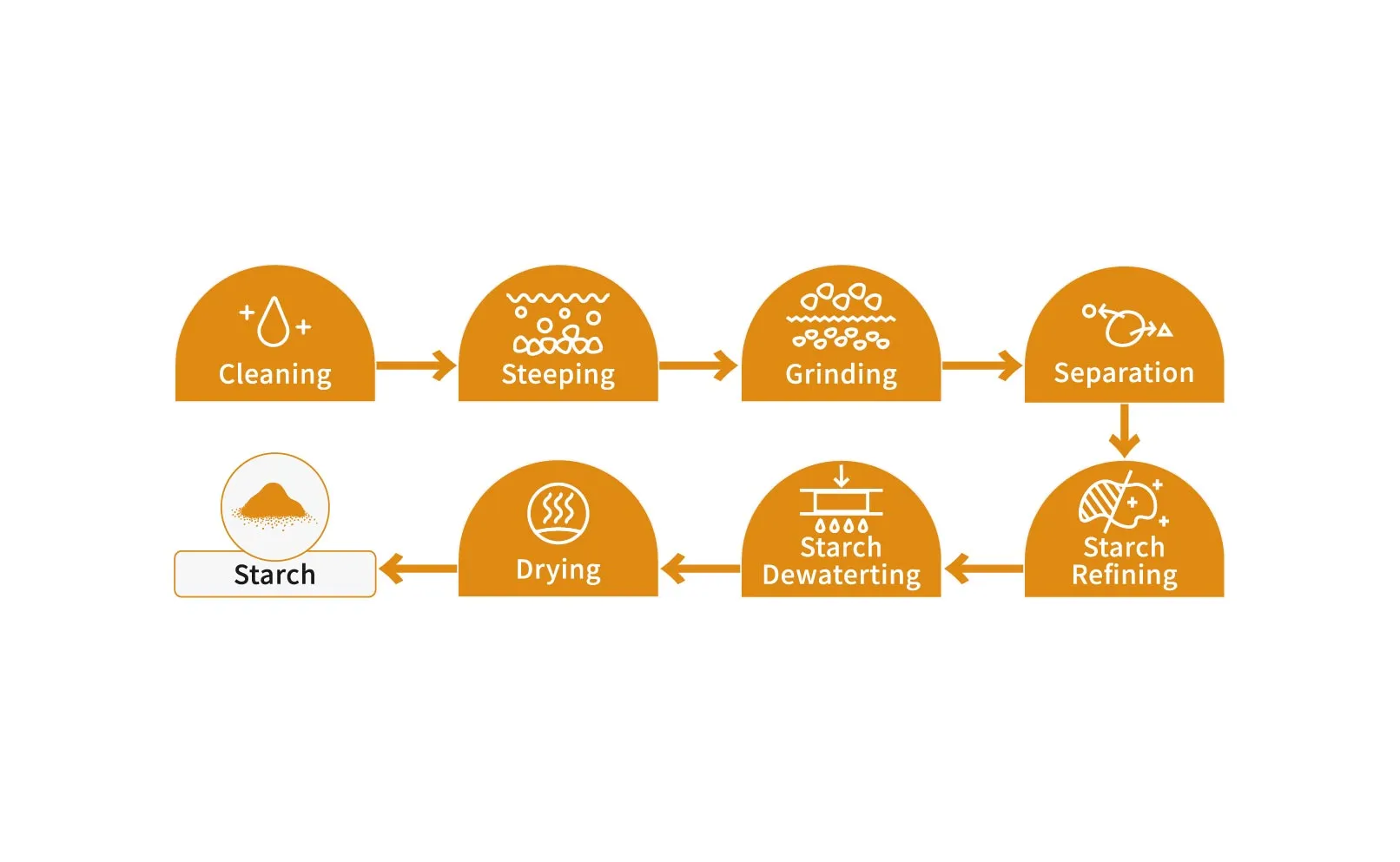
A flowchart can explain the general sequence, but it cannot replace project engineering. In my experience, the most important decisions appear before equipment selection: which raw material is available, what the market will buy, and how the plant will use every part of each incoming ton.
Why does the starch production process change with the raw material?
A generic process diagram can hide major technical differences. Corn, wheat, cassava, and potatoes contain starch in different physical structures and alongside different levels of protein, fiber, germ, soil, and soluble materials. I therefore begin a plant evaluation with raw-material testing rather than with a preferred machine list.
The starch production process changes because each raw material requires different preparation, separation, washing, and by-product recovery conditions. Corn usually requires wet milling and germ separation; wheat requires gluten and fiber management; cassava requires rasping and intensive screening; and potatoes require washing, rasping, and rapid processing to protect starch quality.
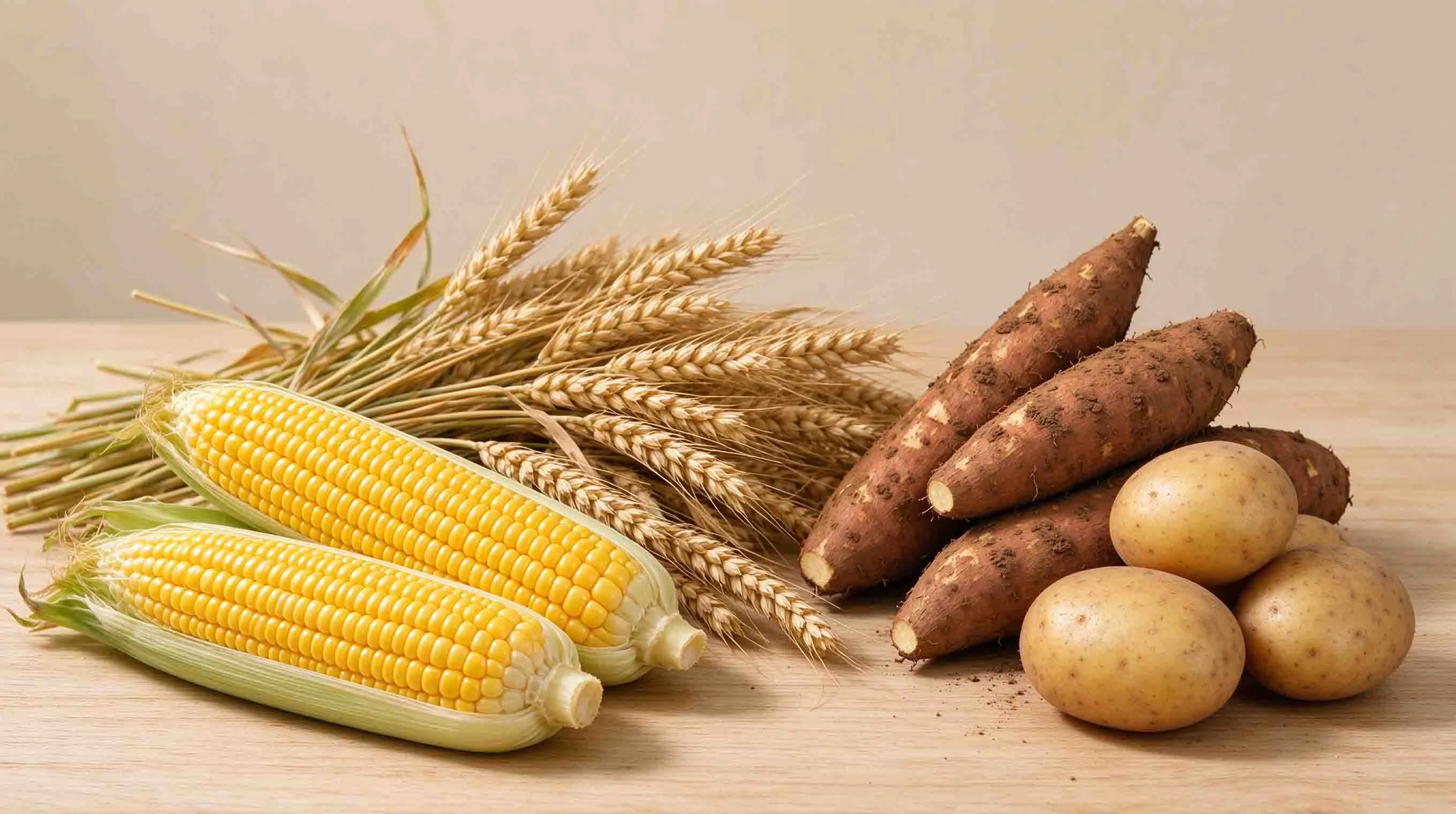
Corn and wheat
Corn wet milling normally includes steeping, degermination, milling, fiber separation, gluten separation, starch washing, and dewatering. The process must recover valuable germ, protein, and fiber rather than treating them as waste. Steeping conditions affect kernel softening, separation efficiency, fermentation risk, and water management.
Wheat starch production presents a different challenge because the process separates starch from gluten and other flour components. The quality of wheat, flour preparation, gluten properties, and wash-water control can influence product purity and recovery. A wheat starch plant may also require careful management of pentosans and soluble materials.
Cassava and potatoes
Cassava processing commonly uses cleaning, peeling or preparation, rasping, screening, fiber separation, starch extraction, hydrocyclone washing, dewatering, and drying. Fresh cassava can deteriorate quickly, so supply distance and processing time become important investment factors.
Potato starch production requires effective washing because soil can enter with the crop. Rasping releases starch from potato cells, while screening and hydrocyclone systems help remove fiber and soluble impurities. Storage conditions also matter because potatoes can lose quality before processing.
I would ask a supplier to document:
🔸Seasonal moisture and starch variation.
🔸Foreign-material and soil levels.
🔸Expected storage duration.
🔸Laboratory separation results.
🔸By-product specifications.
🔸Water quality and wastewater load.
A supplier may provide indicative performance figures, but I would treat them as engineering assumptions until they are validated against representative raw material. I have seen project discussions change significantly after a buyer shared samples from the actual harvest region. The proposed process became more suitable only after the team considered crop variation, not just laboratory starch content.
What are the main stages in a starch production process?
The main stages include reception, preparation, size reduction, separation, starch washing, concentration, dewatering, drying, packaging, and by-product handling. Each stage affects yield, purity, moisture, energy consumption, and production stability. I evaluate the connections between stages because a strong individual machine cannot correct a poorly balanced process line.
A complete starch production process normally follows this sequence: raw-material reception and storage, cleaning and preparation, grinding or rasping, separation of starch from protein, fiber, germ, or pulp, starch washing and concentration, mechanical dewatering, thermal drying, finished-product handling, and by-product recovery.
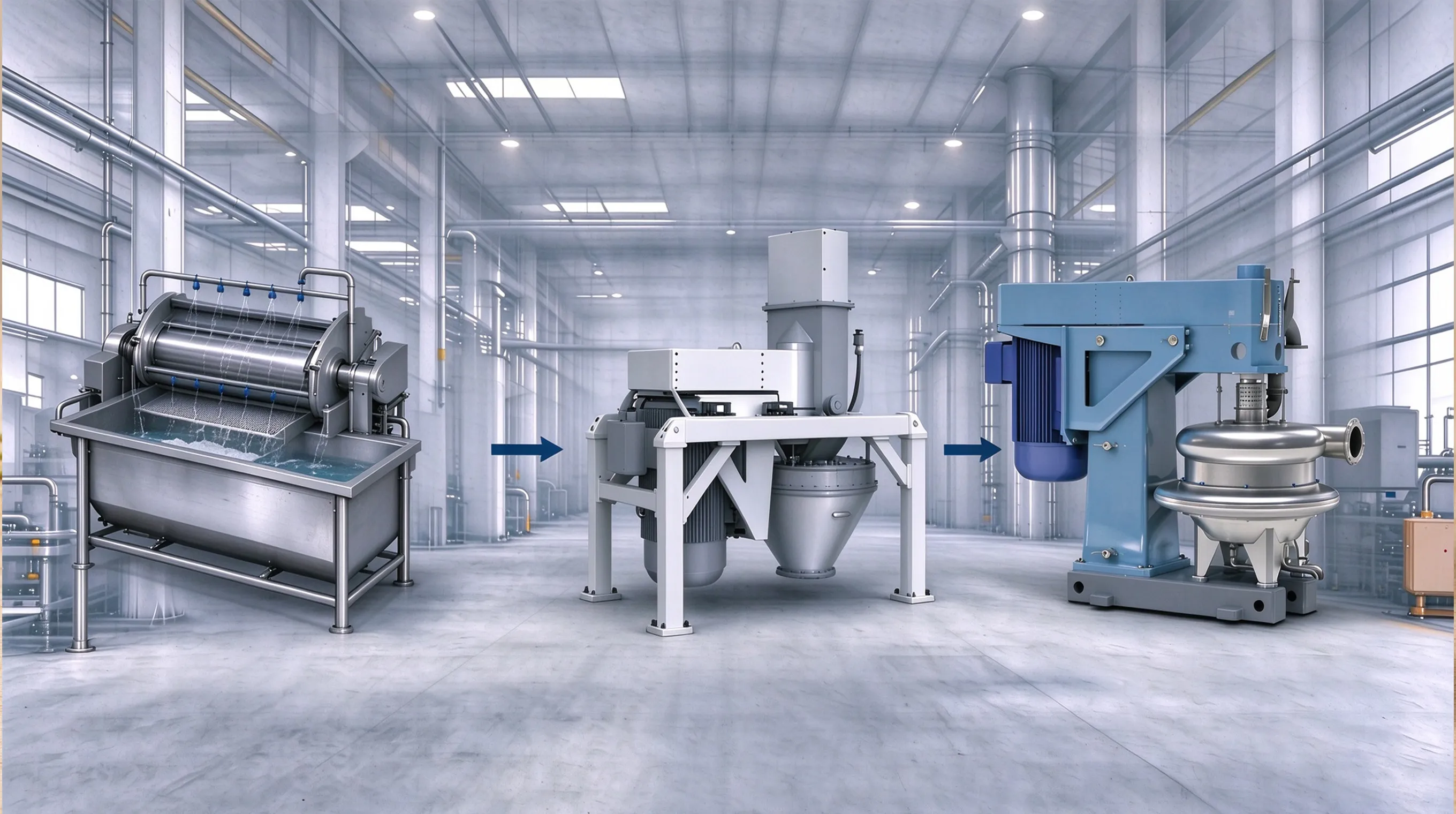
1. Reception and preparation
The plant receives, weighs, samples, cleans, and stores the raw material. Preparation may include steeping for corn, flour preparation for wheat, peeling or washing for cassava, and intensive cleaning for potatoes. Stable feeding protects downstream equipment and helps maintain consistent product quality.
2. Grinding, milling, or rasping
The plant uses the appropriate size-reduction method to release starch while limiting damage to starch granules and unwanted contamination. Corn wet milling uses controlled grinding after steeping. Cassava and potato plants commonly use rasper systems. The correct settings depend on raw-material structure and desired recovery.
3. Component separation
This stage separates starch from germ, fiber, protein, gluten, pulp, and soluble materials. Screens, centrifuges, hydrocyclones, decanters, and related equipment may work together. The goal is not simply to remove impurities. The goal is to create saleable streams with consistent quality.
| Stage | Main purpose | Typical evaluation point |
| Preparation | Stabilize incoming material | Cleaning efficiency and feed consistency |
| Size reduction | Release starch | Granule damage and extraction rate |
| Separation | Remove non-starch components | Purity, recovery, and co-product quality |
| Washing | Reduce soluble impurities | Ash, protein, color, and cleanliness |
| Dewatering | Remove free water mechanically | Cake moisture and energy demand |
| Drying | Reach final moisture | Product stability and thermal efficiency |
4. Washing and concentration
Starch washing often uses hydrocyclone systems or other centrifugal separation technology. Counter-current water use can improve purity while limiting fresh-water demand, but the final design must consider water quality, recycle concentration, and wastewater treatment.
5. Dewatering and drying
Mechanical dewatering should remove as much water as practical before thermal drying. Vacuum filters, peeler centrifuges, or other systems may be selected according to material behavior and capacity. Drying then establishes the final moisture and handling characteristics. I would request product moisture targets, energy assumptions, and control philosophy rather than accepting a nominal dryer capacity alone.
6. By-product handling
Germ, protein, gluten, fiber, pulp, and soluble streams may support the project’s economics. Their value depends on purity, moisture, storage, local buyers, and transport costs. A plant that reports high starch output but loses valuable co-products may not deliver the best total raw-material value.
How should buyers evaluate a starch plant beyond equipment names?
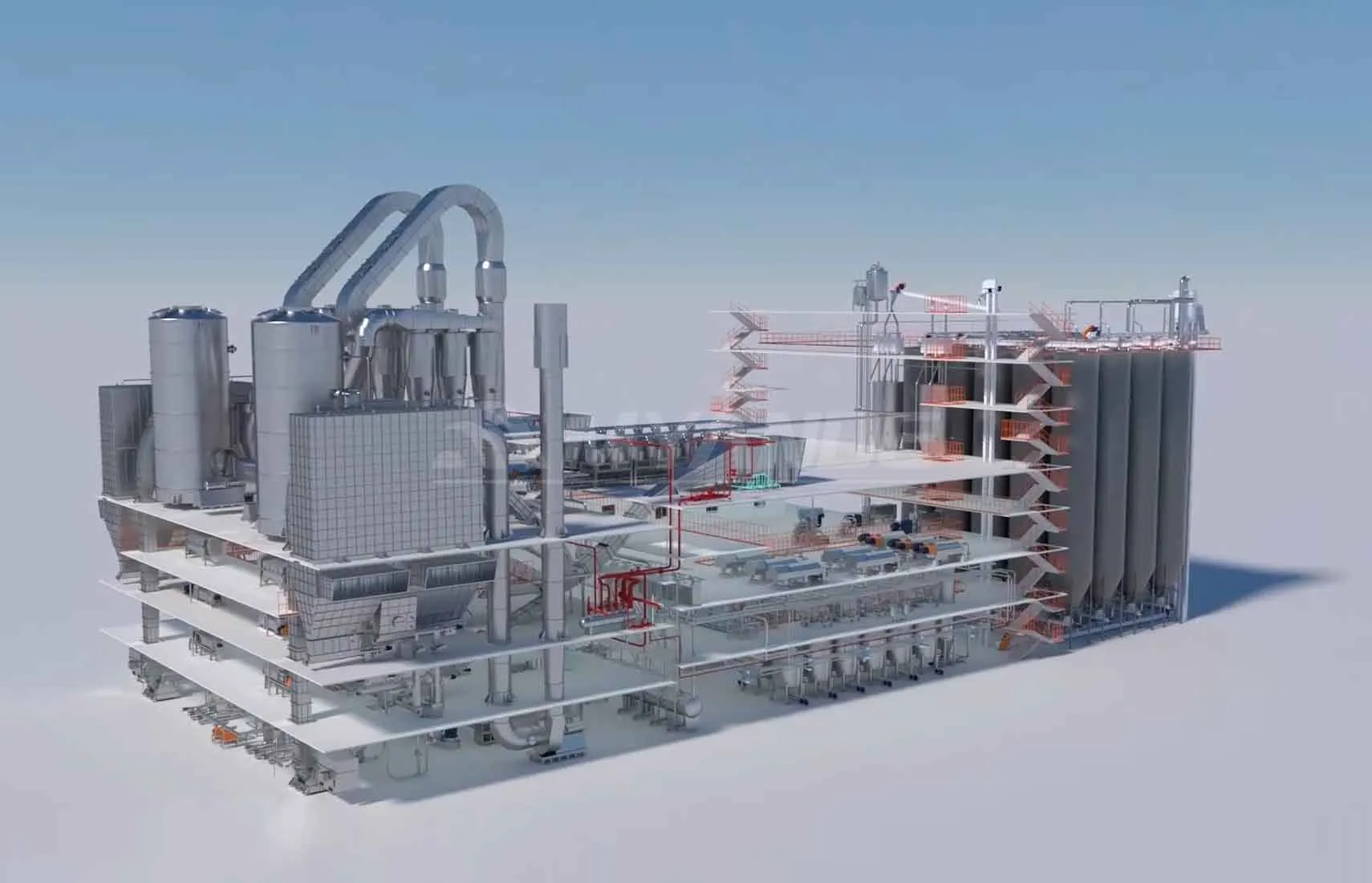
A plant should be evaluated as an integrated production and investment system. Buyers need to compare process fit, quality guarantees, utilities, environmental performance, automation, expandability, and supplier execution capability. I do not use the price or capacity of one machine as a substitute for a complete technical and commercial assessment.
Buyers should evaluate a starch plant through a balanced set of indicators: starch recovery and purity, by-product value, water and steam consumption, electricity demand, wastewater requirements, operating stability, maintenance access, automation, capital cost, and future product flexibility.
Product goals determine plant design
“Finished starch” is not a single universal specification. A food-grade native starch, industrial starch, modified starch feedstock, or glucose-production intermediate may require different purity, moisture, color, microbiological, or functional specifications.
If the investor plans to produce modified starch, glucose syrup, maltodextrin, or sorbitol later, the initial layout should reserve space and utilities where practical. Deep processing can add liquefaction, saccharification, filtration, decolorization, ion exchange, evaporation, crystallization, and drying. The best expansion route depends on market demand and the quality of the native starch stream.
Utilities and environmental conditions
I would request a utility balance covering:
🔸Process water and fresh-water demand.
🔸Steam consumption and condensate recovery.
🔸Electricity load and peak demand.
🔸Cooling-water requirements.
🔸Compressed air and instrument air.
🔸Wastewater volume and organic load.
🔸Solid-residue and odor management.
Actual values require project-specific validation. Local electricity prices, fuel costs, water availability, discharge rules, and climate conditions can change the operating-cost conclusion.
Supplier selection
A qualified supplier should explain the process logic, not only display equipment photographs. I would assess:
1. Relevant references: Similar raw material, capacity, product, and operating environment.
2. Process documentation: Mass balance, water balance, utility list, PFDs, and control philosophy.
3. Performance boundaries: Clear assumptions behind recovery, purity, capacity, and consumption figures.
4. Manufacturing quality: Inspection plans, material standards, testing, and documentation.
5. Project execution: Installation, commissioning, operator training, spare parts, and support.
6. Expansion planning: Practical options for derivatives or higher-value products.
Certifications and reference claims should be treated as documents for buyers to verify. I also recommend qualified professional evaluation of hygienic design, pressure equipment, electrical compliance, fire safety, environmental permitting, and application-specific performance.
In one anonymized expansion discussion, the buyer initially focused on adding nominal capacity. After reviewing by-product markets and utility constraints, the team changed its priority to better separation and lower water consumption.
That decision illustrated an important point: the strongest project may produce more value per ton of raw material without simply increasing starch volume.
Frequently Asked Questions
1. What is the first step in a starch production process?
The first step is usually raw-material reception, sampling, cleaning, and preparation. The exact preparation depends on the crop. Corn may require steeping, while potatoes require intensive washing and cassava may require rapid rasping after delivery.
2. How is starch separated from other raw-material components?
Plants use a combination of milling or rasping, screening, centrifugation, hydrocyclones, decanters, and washing systems. The selected combination depends on whether the raw material contains germ, gluten, protein, fiber, pulp, or high levels of soluble impurities.
3. Does higher starch yield always mean a better plant?
No. A viable plant must also consider starch purity, by-product recovery, water and energy consumption, wastewater treatment, maintenance, and stable operation. A higher nominal yield may not create better economics if the plant loses valuable protein, germ, fiber, or pulp.
4. Can a native starch plant later produce glucose or modified starch?
A native starch plant may provide a suitable foundation, but later production requires additional systems and utilities. The feasibility depends on product demand, starch quality, site layout, wastewater capacity, energy availability, and the required refining and drying technology.
5. How should I compare starch plant suppliers?
I would compare suppliers using relevant references, process guarantees, mass and utility balances, manufacturing quality, project execution capability, lifecycle support, and expansion flexibility. I would verify certifications and performance claims and obtain an independent technical review for major investment decisions.
Conclusion
The starch production process is an integrated engineering route, not a universal sequence of machines. I would begin with raw-material behavior, then define product specifications, capacity, utilities, by-product markets, and future processing goals. I would also compare suppliers through verified performance assumptions and total project economics rather than equipment price alone. If you are planning a new starch plant or expansion, contact Myande to discuss a process route based on your raw material, target products, site conditions, and long-term value strategy.

Recent Posts

October 26, 2016
The Most Successful Engineering Contractor





Contact Us
Product Information
Quantity
Unit
Piece
Support order samples, customization, wholesale direct, and complete payment. If the product you look for does not have corresponding customized content, pls fill out the form below to contact us, and we will reply ASAP.