

Starch Processing Equipment: Complete Guide for Industrial Plants
Sep 21, 2026
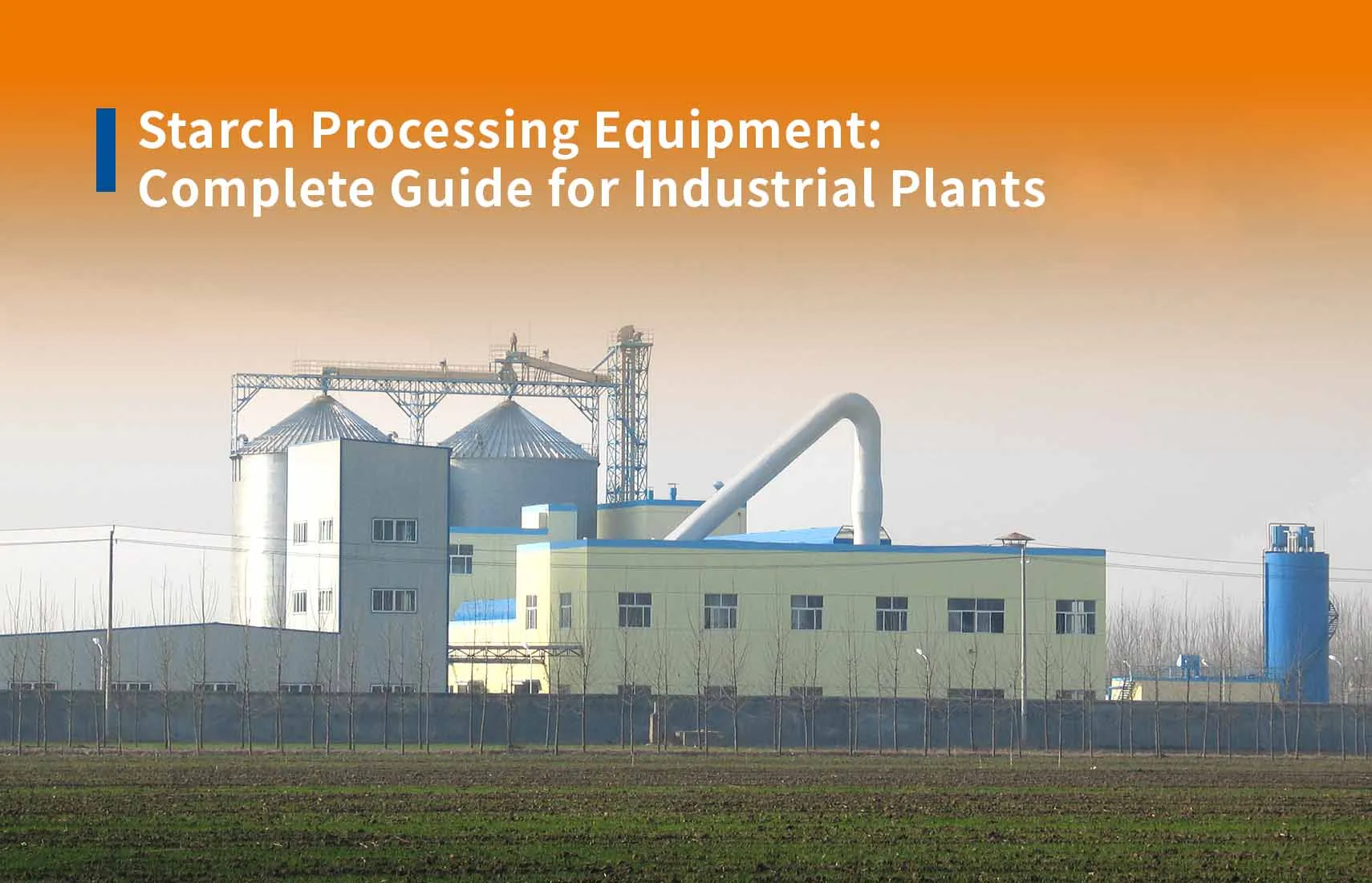
Starch processing equipment decisions often begin with a machine list, but that approach can create costly gaps. I have seen project discussions become difficult when raw material quality, target products, and by-product recovery remain unclear. I use a process-first evaluation to connect equipment selection with stable production, product quality, resource efficiency, and long-term plant value.
The right starch processing equipment depends on the raw material, target product, production capacity, utilities, and overall process route. Buyers should evaluate the complete chain—from raw material receiving and preparation to separation, washing, dewatering, drying, automation, and by-product handling—rather than comparing individual machines or purchase prices alone. Supplier references, performance guarantees, and certification documents should also be verified for the specific project.
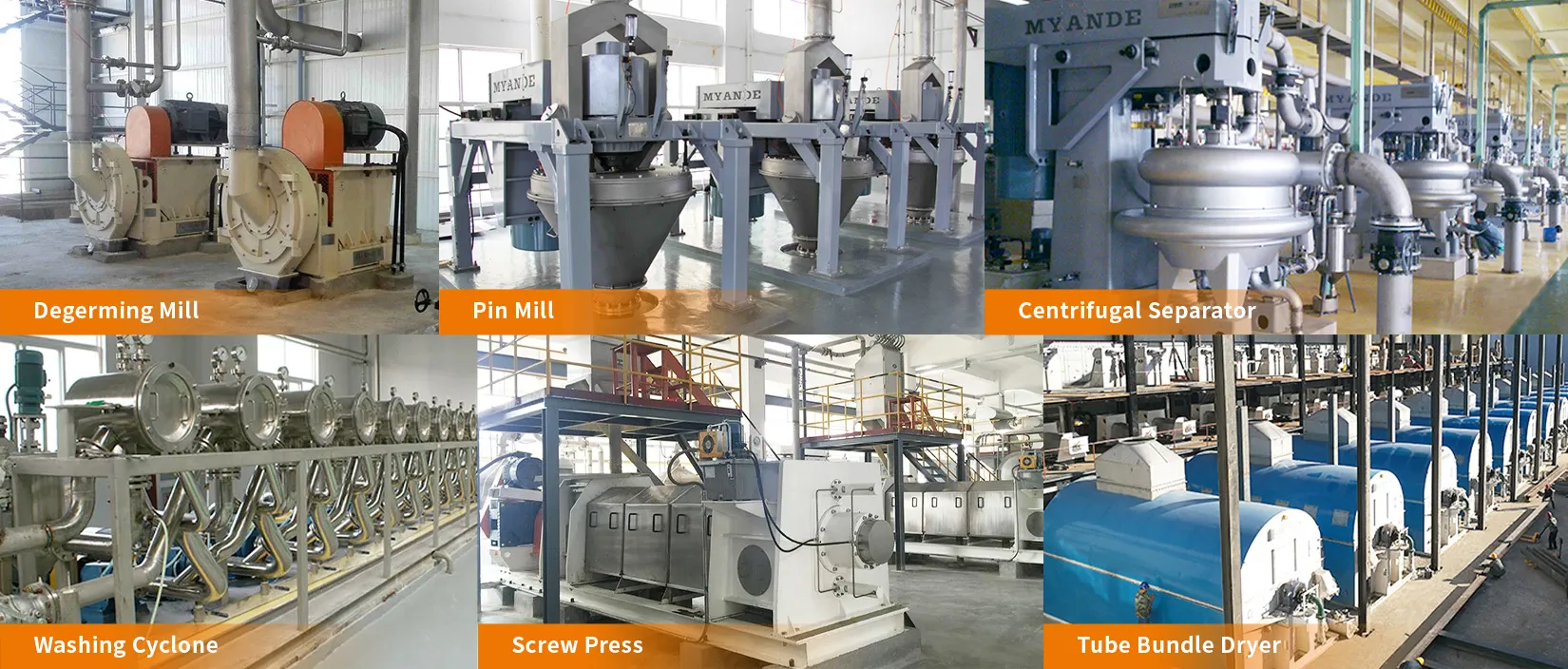
I usually begin customer discussions with four questions: What raw material is available? What product will the plant sell? What capacity is required? How will the plant use every valuable fraction of the raw material? The answers provide a stronger basis for supplier comparison than a catalogue or a nameplate capacity.
How should buyers define starch processing equipment requirements?
An unclear requirement can produce an apparently attractive quotation that does not match the future plant. The problem becomes more serious when a buyer compares equipment before establishing the material balance, product specifications, or operating conditions.
Buyers should define starch processing equipment requirements through a project brief covering raw materials, capacity, product quality, utilities, by-products, automation, site conditions, and delivery scope. This brief allows suppliers to propose a suitable process configuration instead of offering isolated machines.
Start with the raw material
Different crops create different engineering conditions. A corn wet-milling project may require systems for steeping, germ recovery, fiber separation, gluten or protein separation, starch washing, and by-product treatment. Wheat, cassava, and potato plants have different preparation and separation requirements.
I often ask customers to provide more than the crop name. Useful information includes:
🔸Moisture content and seasonal variation
🔸Starch content and expected impurity levels
🔸Particle size and physical condition
🔸Storage duration and supply stability
🔸Presence of soil, stones, fibers, or damaged material
🔸Local harvesting and transport conditions
A supplier that receives only “500 tons per day of corn” cannot responsibly finalize the complete line. The supplier needs to understand whether the stated capacity refers to raw material input, starch output, or another operating basis.
Define the product route
The required equipment changes when the target product changes. A native food-grade starch line may focus on purity, microbiological control, moisture, whiteness, and drying performance. An industrial starch line may have different quality priorities. A plant producing glucose syrup, maltodextrin, sorbitol, or modified starch requires additional processing stages.
For downstream applications, I recommend defining:
1. Product type and grade
2. Required purity and moisture
3. Concentration or DE value where relevant
4. Packaging and storage conditions
5. Customer specifications and applicable regulations
6. Future products that the plant may add
The project brief should also identify whether the plant will sell protein, germ, fiber, pulp, or other fractions. These streams can influence equipment selection and plant economics.
Clarify the supplier’s scope
Two quotations may appear similar while covering very different responsibilities. I ask buyers to compare whether each proposal includes:
🔸Process design and material balance
🔸Equipment manufacturing
🔸Piping, valves, instruments, and electrical systems
🔸Automation software and control panels
🔸Installation supervision and commissioning
🔸Operator training and spare parts
🔸Performance testing and after-sales support
The buyer should request a clear battery limit and an exclusions list. The buyer should also distinguish supplier-issued technical data from independently verified results.
Which starch processing equipment systems are essential?
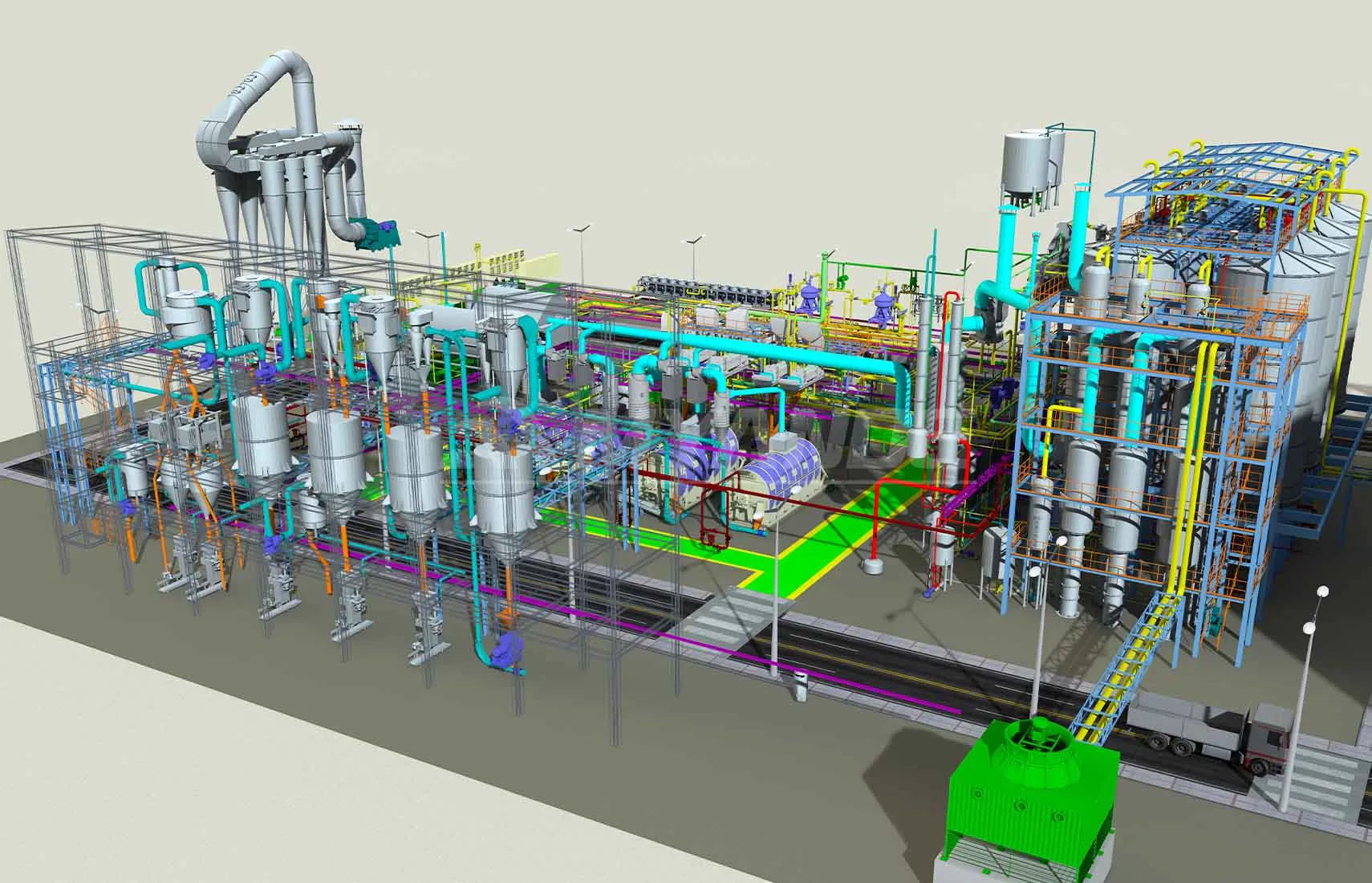
A starch plant is an integrated process chain, not a collection of unrelated machines. Each system affects the next one. Poor preparation can reduce separation efficiency, while weak washing or dewatering can increase drying costs and lower final quality.
Essential starch processing equipment usually includes raw material handling, preparation, separation, starch washing, dewatering, drying, utilities, automation, and by-product systems. The exact configuration depends on crop characteristics, capacity, product grade, and the plant’s operating strategy.
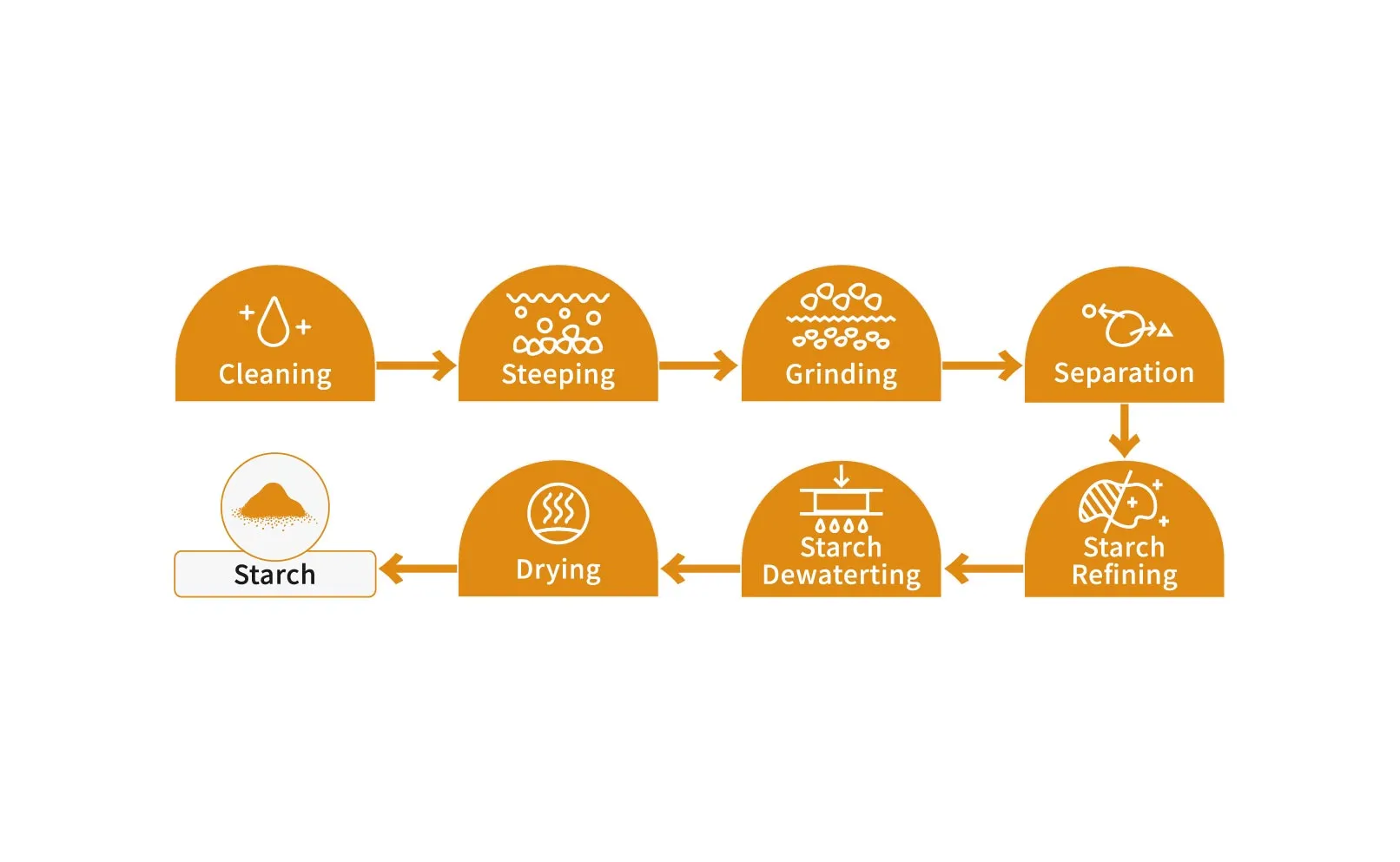
Main process stages
| Process stage | Typical purpose | Buyer evaluation points |
| Receiving and storage | Protect and feed raw material | Capacity, contamination control, storage losses |
| Preparation | Clean, condition, steep, or mill material | Material adaptation, wear, process stability |
| Separation | Recover starch and valuable fractions | Separation efficiency, product purity, recoveries |
| Washing | Remove soluble and insoluble impurities | Water use, purity, continuous operation |
| Dewatering | Reduce moisture before drying | Cake moisture, filtration performance, reliability |
| Drying and finishing | Reach final moisture and handling quality | Energy use, temperature control, product protection |
| By-product handling | Recover and stabilize other streams | Marketability, moisture, storage, value |
| Automation | Coordinate the complete process | Control logic, alarms, data collection, integration |
Why integration matters
A dryer cannot compensate for poor dewatering. A separation system cannot fully correct unsuitable raw material preparation. A high-capacity washing system may also create excessive water demand if the process design does not include effective recycling and treatment.
During customer discussions, I often see attention concentrate on the largest machine. However, the plant’s performance usually depends on the interaction between equipment, controls, utilities, and operating procedures. The buyer should therefore request:
🔸A process flow diagram
🔸A preliminary mass balance
🔸Water, steam, electricity, and compressed-air estimates
🔸A utility balance for normal and peak operation
🔸A list of critical control points
🔸A description of cleaning and maintenance requirements
🔸A by-product flow and quality description
The buyer should review whether the proposed system can operate at partial load. A plant that performs well only at full design capacity may create difficulties during commissioning, seasonal raw material changes, or market downturns.
Evaluate automation as a process tool
Automation is not only a method of reducing manual labor. A suitable control system can stabilize flow, moisture, density, temperature, pH, concentration, and residence time. It can also record operating data that helps the plant identify losses.
I recommend asking suppliers how the system handles:
🔸Start-up and shutdown sequences
🔸Product changes
🔸Abnormal material conditions
🔸Instrument failure
🔸Alarm priorities
🔸Operator permissions
🔸Data backup and reporting
🔸Remote support and cybersecurity
The buyer should verify which instruments are included and which standards apply. Certification documents should be treated as documents to review, not as automatic proof that the complete plant meets every local requirement.
How should buyers compare starch processing equipment suppliers?
A low equipment price can be misleading if it excludes engineering, commissioning, utilities, or performance responsibility. A technically strong proposal can also be unsuitable if the supplier lacks relevant experience with the buyer’s raw material or target product.
Buyers should compare suppliers through technical fit, documented project experience, delivery scope, manufacturing quality, guarantees, service capability, and total cost of ownership. I would not select a supplier based on catalogue capacity or a general reference alone.
Check relevant references
A reference should match the project as closely as possible. The buyer should ask:
🔸Was the plant designed for the same raw material?
🔸Is the capacity comparable?
🔸Does the plant produce the same product grade?
🔸Was the supplier responsible for the full process line?
🔸Has the plant reached stable commercial operation?
🔸Can the buyer speak with the owner or operator?
A supplier may have delivered a dryer, for example, but that does not prove the supplier can manage a complete starch processing project. The buyer should separate equipment references from integrated engineering references.
Review manufacturing and quality control
Equipment quality affects availability, maintenance, hygiene, and operating life. A buyer should examine the supplier’s production controls instead of relying only on polished brochures.
Important questions include:
1. Which components are manufactured in-house?
2. Which components are subcontracted?
3. How does the supplier control material certificates and weld quality?
4. What inspections occur before shipment?
5. How are dimensional checks and pressure tests documented?
6. Which spare parts are critical during the first two years?
7. What is the expected response time for service issues?
I also recommend checking whether the supplier’s quality system, product certifications, and safety documents apply to the actual equipment and project scope. Buyers should verify certification status with the issuing body or qualified technical professionals when necessary.
Compare commercial outcomes
Purchase price is only one part of the investment decision. A more useful comparison includes capital cost, operating cost, risk, flexibility, and value recovery.
| Evaluation area | Questions for the buyer |
| Capacity | What is the operating basis and expected stable range? |
| Product quality | Which specifications are guaranteed and how are they tested? |
| Resource use | What are the assumptions behind water, steam, and power figures? |
| Yield | Is yield based on laboratory data, pilot work, or plant performance? |
| By-products | Are quantities, quality, and markets clearly defined? |
| Maintenance | What wear parts, cleaning, and service intervals are expected? |
| Commissioning | Who is responsible for training, testing, and performance trials? |
| Future expansion | Can the plant add derivatives or higher-value products later? |
The buyer should calculate costs using local energy prices, labor rates, water treatment requirements, logistics, and financing assumptions. I would treat payback claims as preliminary until the supplier provides the supporting material balance and project conditions.
Frequently Asked Questions
1. What is the most important factor when selecting starch processing equipment?
The most important factor is process fit. Raw material properties, target product specifications, capacity, utilities, and by-product plans must work together. A machine with excellent standalone specifications may not deliver value if it does not fit the complete process route.
2. Can one starch processing line handle corn, wheat, cassava, and potato?
One line should not be assumed to handle every crop without modification. Each raw material has different physical properties, impurity profiles, separation behavior, and pretreatment requirements. A qualified process supplier should evaluate material data and define which equipment changes, trials, or operating adjustments are necessary.
3. Should buyers prioritize capacity or product quality?
Buyers should balance both. A high nameplate capacity has limited value if the plant cannot maintain product quality or stable operation. I recommend comparing stable commercial capacity, quality results, resource consumption, and operating range rather than reviewing maximum throughput alone.
4. What documents should a supplier provide before quotation?
The supplier should normally provide a process description, flow diagram, preliminary material balance, utility estimates, equipment list, battery limits, schedule, exclusions, reference projects, and proposed guarantees. The buyer should also request clarification on testing methods and commissioning responsibilities.
5. Is the cheapest equipment quotation the best choice?
The cheapest quotation is not necessarily the lowest-cost solution. Missing scope, weaker automation, higher energy use, limited service support, or poor by-product recovery can increase total ownership cost. Buyers should compare lifecycle economics and execution risk before making a decision.
Conclusion
I view starch processing equipment as one part of a larger investment decision. The strongest project starts with raw material conditions, defines the target product, maps the full process chain, and evaluates how the plant will recover value from every useful fraction. Buyers should compare suppliers through documented references, clear scope, verified technical assumptions, manufacturing controls, and realistic operating economics. Myande helps customers discuss these process-route and equipment-combination questions for starch and starch-processing projects. Contact Myande to review your raw material, capacity, product goals, and future expansion plans with a qualified project team.

Recent Posts

October 26, 2016
The Most Successful Engineering Contractor





Contact Us
Product Information
Quantity
Unit
Piece
Support order samples, customization, wholesale direct, and complete payment. If the product you look for does not have corresponding customized content, pls fill out the form below to contact us, and we will reply ASAP.